Summary:
You caught a whiff of something foul coming from the basement. Maybe it hit you on the way to the laundry room. Maybe it’s been lingering for a few days and you’ve been hoping it would just go away on its own. Either way, you’re here now — which means you’re smart enough not to ignore it entirely.
The good news: sometimes a sewer smell in the basement is nothing more than a dry drain that needs a cup of water. The not-so-good news: sometimes it’s the first signal that your cesspool or septic system is heading toward a backup. Knowing which one you’re dealing with is the whole game.
Basement Drain Smells Like Sewage? Start Here
Before you call anyone, it helps to understand what you’re actually smelling. Sewer gas is a mixture of gases — hydrogen sulfide being the most notable — produced by decomposing waste inside your pipes or cesspool. Hydrogen sulfide is what gives it that rotten-egg character, and your nose can detect it at incredibly low concentrations.
We’re talking less than one part per billion. That’s why even a minor issue can fill a basement fast.
The smell itself isn’t just unpleasant. At concentrations above 10 parts per million, hydrogen sulfide causes eye irritation. Above 100 ppm, it becomes immediately dangerous — and here’s the part most people don’t know: at that level, it actually paralyzes your olfactory nerve. The smell disappears. Not because the gas is gone, but because your nose has stopped working.
So if you noticed a strong smell that seemed to fade on its own, don’t assume the problem resolved itself.
The Most Likely Culprit: A Dry P-Trap in a Rarely Used Drain
If the smell is coming from a floor drain, laundry sink, or basement bathroom that doesn’t get used much, a dry P-trap is the first thing to check. The P-trap is the curved section of pipe beneath a drain that holds a small amount of water at all times. That water acts as a seal, blocking sewer gases from traveling back up through the drain and into your living space.
When a drain sits unused for weeks or months — which is common in basement utility areas — that water evaporates. Once it’s gone, there’s nothing stopping the gas from coming through. It’s genuinely that simple, and the fix is equally simple: pour a gallon of water down the drain and wait a few minutes. If the smell clears up within an hour or so and doesn’t return, a dry trap was almost certainly your problem.
Some people add a small amount of cooking oil on top of the water after refilling the trap. Oil evaporates much more slowly than water, so it helps the seal last longer between uses. It’s a minor trick, but it works.
Here’s the important caveat, though. If you refill the drain and the smell comes back within a day or two, or if it never really went away in the first place, you’re not dealing with a dry trap. You’re dealing with something else — and that something else is worth taking seriously. A P-trap fix is a one-time, no-cost solution. If it didn’t hold, the source of the gas is still active somewhere in your system.
One more thing to check while you’re at it: the cleanout access plug. That’s the threaded cap on the main cleanout pipe, usually located near the floor in the basement. If the plug is missing, cracked, or not fully seated, it’s an open pathway for sewer gas. Replacement caps cost next to nothing at any hardware store, and swapping one in takes about two minutes.
Could a Blocked Vent Stack Cause Sewer Smell in the Basement?
Yes — and this one surprises a lot of homeowners because the problem is on the roof, not in the basement. Your plumbing system has a vent stack, a pipe that runs up through the house and exits through the roof. Its job is to let air into the drain system so that water flows freely and pressure stays balanced. Without that airflow, the system creates a vacuum effect that can pull water out of your P-traps and allow sewer gas to back up into the house.
Vent stacks can get blocked by leaves, bird nests, or debris — but on Long Island, the more common winter scenario is ice. When temperatures drop hard, the moisture in the exhaust can freeze at the top of the vent pipe, sealing it off completely. Homeowners sometimes notice a sewer smell in the basement during cold snaps and can’t figure out why, because nothing has changed inside the house. The answer is on the roof.
A blocked vent stack is worth having a professional look at, particularly in older homes. Many Long Island houses built in the 1950s and 1960s have vent pipes that haven’t been inspected in decades. If the pipe itself is cracked or deteriorated, poking the blockage loose won’t be enough — you’ll need the pipe repaired or replaced to restore proper airflow.
The other thing a vent stack issue does is create gurgling sounds in your drains and toilets. If you’re hearing that alongside the smell, that combination is a meaningful signal. Gurgling on its own can be minor. Gurgling plus a persistent sewer odor in the basement points toward a pressure or airflow problem in the system — not just a dry trap.
What Causes Sewer Backup — and Why Long Island Homeowners Need to Pay Attention
If the smell is persistent, if it’s getting worse, or if you’re also noticing slow drains, gurgling, or water backing up into a floor drain — you’ve moved past the simple fixes. At that point, the question shifts from “what’s causing the smell?” to “what’s happening with my cesspool or septic system?”
For homeowners across Nassau and Suffolk Counties, this is where the stakes get higher than they would be almost anywhere else in the country. Most Long Island homes run on cesspools — systems that were installed decades ago and are now working well past their original design life. When one of those systems starts to fail, the first thing most homeowners notice is a smell.
Signs Your Cesspool Is Full or Failing
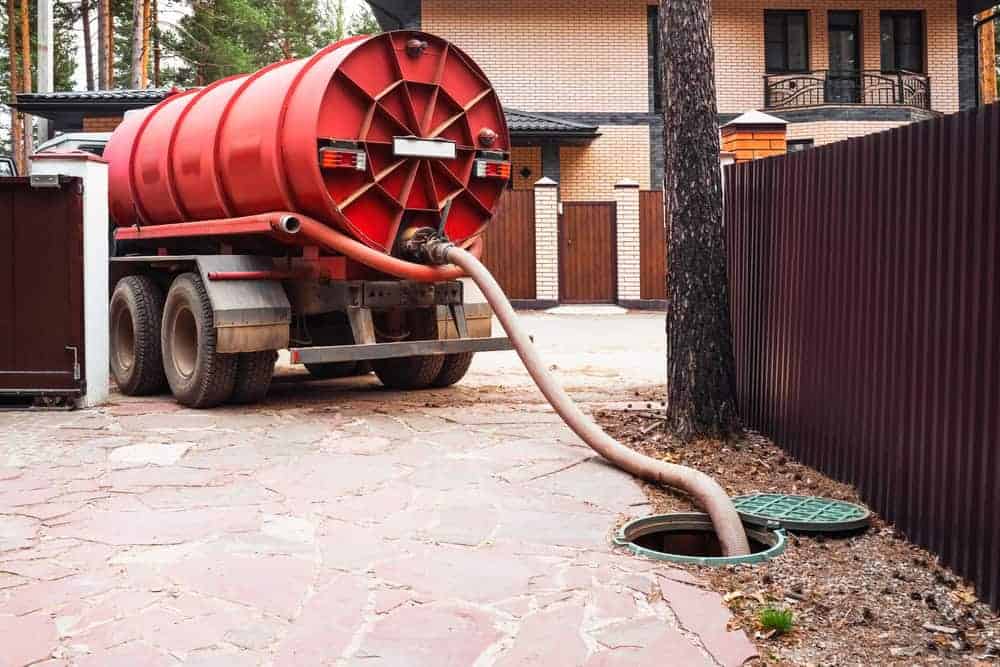
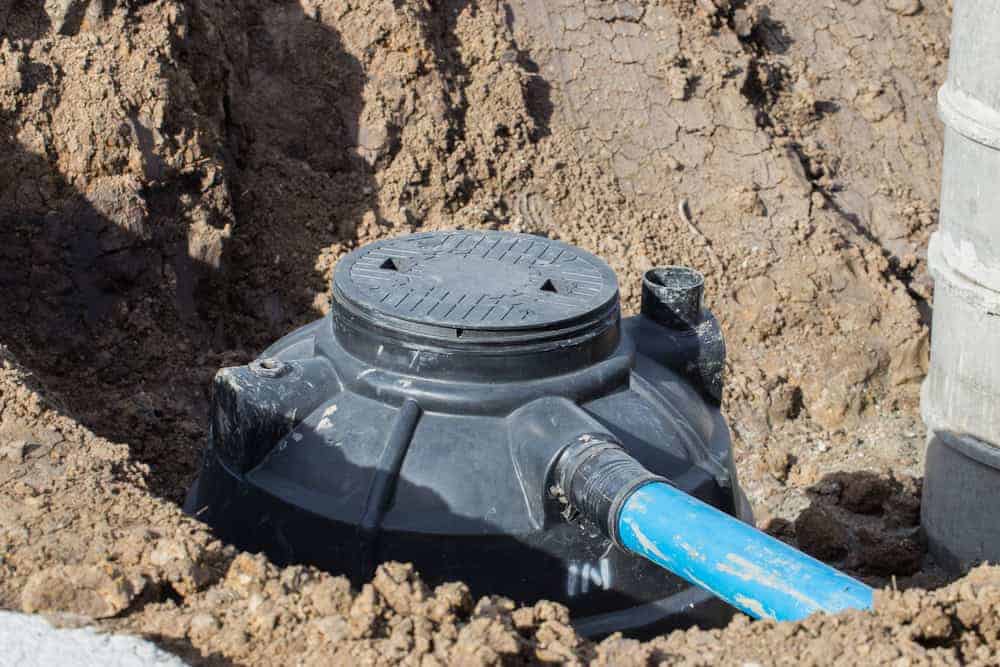
A cesspool that’s approaching capacity — or one that’s already there — creates pressure in the system that pushes sewer gas back toward the house. Most Long Island cesspools hold between 1,000 and 1,500 gallons, and they need to be pumped when solid waste reaches about 25 to 30 percent of total capacity. When that threshold gets crossed and pumping is overdue, the gases have nowhere to go but back through the pipes.
The smell pattern matters here. A dry trap gives you a constant, low-level odor that clears up after you address the drain. A full or failing cesspool tends to produce an intermittent smell — stronger after heavy water use, after rain, or after a period of high occupancy in the house. You might notice it more after doing laundry, running the dishwasher, or having guests over. That’s the cesspool struggling to handle the load.
Other signs that point toward a system-level problem: multiple slow drains throughout the house (not just one), toilets that drain sluggishly, gurgling sounds in the pipes, or water backing up into the basement floor drain. That last one is particularly telling. Because the basement floor drain sits at the lowest point in your plumbing system, it’s the first place a mainline backup will show up. If you see water coming up through it, don’t wait — that’s an emergency.
Long Island’s water table adds another layer to this. During wet seasons, particularly after heavy spring rains or fall storms, the water table rises and reduces the soil’s ability to absorb effluent from the cesspool. That seasonal pressure can push a borderline system into failure faster than homeowners expect. If the smell in your basement is worse after a rainstorm, the water table is likely a factor.
Root Intrusion and Collapsed Pipes: When the Problem Is in the Lines
Not all cesspool-related smells come from the cesspool itself. Sometimes the problem is in the lateral line — the underground pipe that runs from your house to the cesspool. And on Long Island, where mature oaks, maples, and other large trees are a fixture of nearly every neighborhood, root intrusion is one of the most common causes of recurring sewer problems that homeowners can’t seem to get ahead of.
Tree roots are relentlessly attracted to the moisture inside sewer lines. They enter through hairline cracks at pipe joints — cracks so small you’d never notice them from the outside — and then grow into dense mats inside the pipe that trap solids, restrict flow, and eventually cause complete blockages. Homes built before the 1980s are especially vulnerable because they’re more likely to have clay or cast iron laterals, which crack and deteriorate far more readily than modern PVC. If your house was built in the ’50s or ’60s, there’s a real chance the lateral line has never been replaced.
A collapsed or severely offset pipe creates the same problem through a different mechanism. Soil shifts over time — from seasonal freeze-thaw cycles, from the weight of vehicles, from the natural settling of the ground — and that movement can cause older pipes to sag, crack, or separate at the joints. When a pipe belly forms (a low spot where solids collect instead of flowing through), you end up with a persistent partial blockage that generates gas and backs up over time.
The only reliable way to diagnose root intrusion or a collapsed pipe is a sewer camera inspection. A camera gets threaded through the line and shows exactly what’s happening inside — where the roots are, where the pipe has cracked or offset, and how severe the damage is. Without that, you’re guessing. And the difference between a root intrusion that can be cleared and a collapsed pipe that needs excavation is a significant one. Getting the diagnosis right before any work begins is how you avoid paying for the wrong solution.
Here’s the part that matters specifically for Long Island homeowners: under the 2019 cesspool installation ban, a failing cesspool cannot simply be replaced with another cesspool. It has to be upgraded to a septic system or an advanced treatment unit. That regulatory reality means a persistent sewer smell — one that turns out to be caused by a failing system — carries a different financial and logistical weight on Long Island than it does almost anywhere else. It’s not just a repair. It may be the beginning of a full system replacement conversation.
When to Stop Troubleshooting and Call a Professional
Pour water down the floor drain. Check the cleanout plug. If the smell clears up and stays gone, you likely caught a minor issue early. That’s the best-case outcome, and it happens.
But if the smell comes back, if it’s getting stronger, if multiple drains are involved, or if you’ve got any water backing up — stop troubleshooting and get a professional in. The gap between a dry trap and a failing cesspool is enormous, both in terms of what it costs to fix and what it costs to ignore. Repair bills from a system that’s been left too long routinely run between $3,000 and $8,000. Acting before a smell becomes a backup is almost always the cheaper path.
We’ve been working on Long Island cesspools since 1980, and we understand the specific conditions here — the water table, the aging housing stock, the regulatory requirements that apply when a system needs to be replaced. If you’re not sure what you’re dealing with, Antorino & Sons offers free quotes and can get someone out to take a look before a problem gets worse.