Summary:
Your realtor told you to get the septic inspected. Or maybe your drains have been sluggish for a few months and you’re not sure whether to call someone or just wait it out. Either way, you’ve probably run into the same wall most Suffolk County homeowners hit: nobody seems to explain what these services actually involve, what the difference is between them, or whether you need one or both.
That confusion is worth clearing up — because the answer changes depending on your situation, and getting it wrong can cost you far more than the service itself.
What a Septic Inspection Actually Covers
A septic inspection is a structured evaluation of your entire system — not just the tank, but everything connected to it. The goal isn’t to remove anything. It’s to understand whether the system is functioning correctly, whether its components are intact, and whether it’s likely to keep working or quietly heading toward failure.
Think of it the way you’d think about a home inspection before buying a house. You’re not cleaning anything. You’re finding out what you’re actually dealing with.

What the Inspector Looks at During the Visit
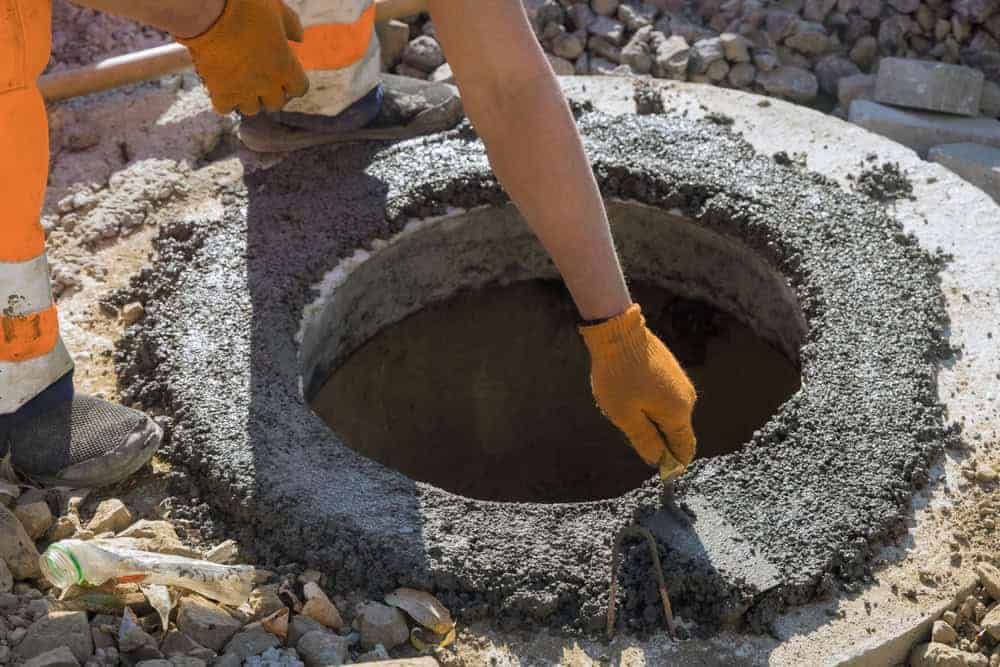
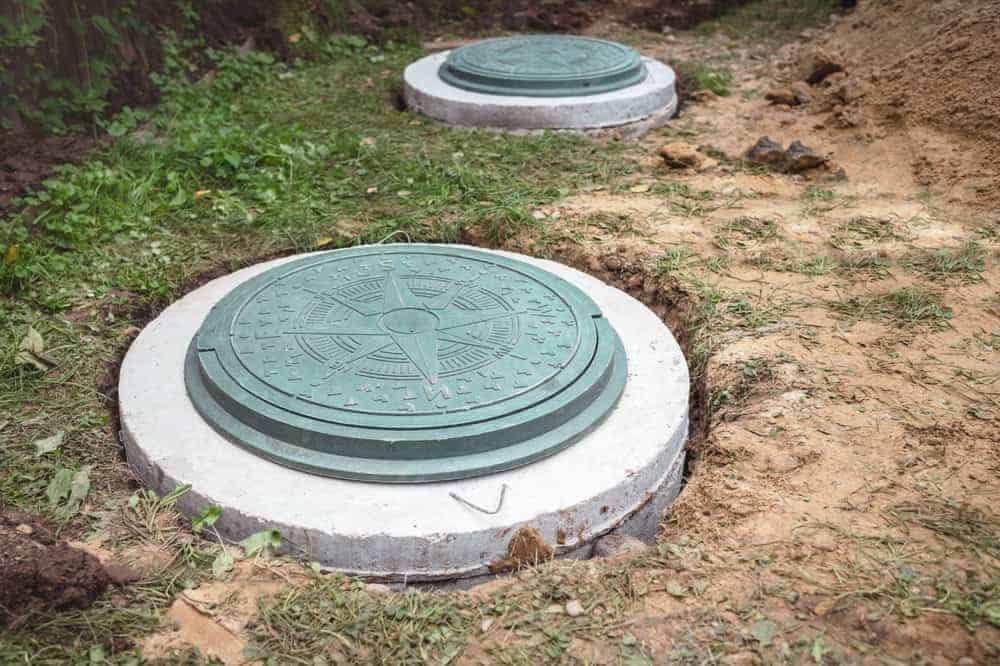
A thorough inspection starts before anything is opened. We locate all access points — tank lids, cleanout ports, the distribution box — and expose them if needed. From there, the work goes deeper than most homeowners expect.
Inside the tank, we check the inlet and outlet baffles, which are the components that control how wastewater flows in and out. Cracked or missing baffles are one of the most common findings on older systems, and they can accelerate failure significantly. We also assess sludge and scum layer depths to determine how much has accumulated and whether the system is being overwhelmed.
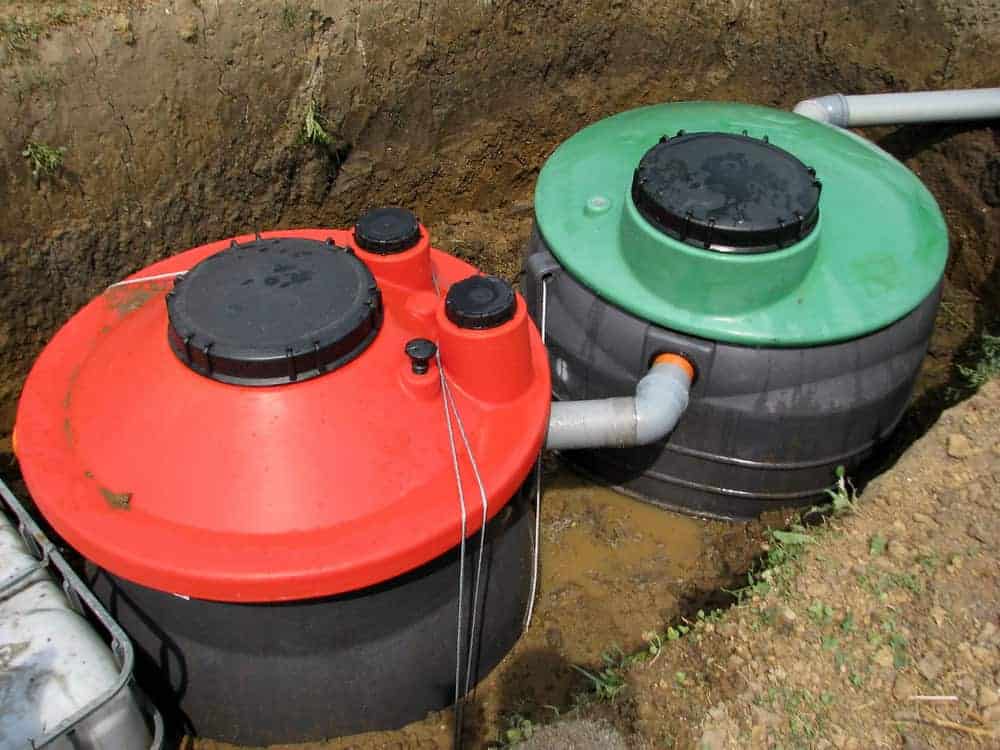
Beyond the tank itself, a complete inspection includes the distribution box — the component that routes effluent to the leach field — and the leach field itself. A saturated or failing leach field is one of the most expensive problems a homeowner can face, and it’s also one of the easiest to miss if you’re only looking at the tank. If camera technology is used, we can see inside pipes and tanks without excavation, which provides a much clearer picture of what’s actually happening underground.
At the end of the visit, you should receive a written report. This is the part that matters most. A proper inspection report documents what was examined, what was found, and what — if anything — needs attention. If you’re selling or buying a home in Suffolk County, that documentation is often required by the lender or attorney before closing can proceed. If you’re just trying to understand your system’s condition, it gives you something concrete to act on rather than a vague verbal summary on the way out the door.
The whole process typically takes one to two hours, depending on system size and accessibility. If the tank hasn’t been pumped recently, cleaning is often recommended before or alongside the inspection — not because it’s required, but because a tank full of solids makes it harder to see and assess the components inside.
When Suffolk County Homeowners Actually Need a Septic Inspection
There are a handful of situations where an inspection isn’t optional — it’s the right call, and waiting makes things worse.
The most common trigger is a real estate transaction. If you’re selling a home in Huntington, Smithtown, Brentwood, or anywhere else in Suffolk County, buyers and their lenders will want documentation that the system is functional. A general home inspector won’t provide that — they do a surface-level visual check that doesn’t involve pumping, probing, or camera work. You need a licensed cesspool or septic contractor to perform the actual evaluation. And if you’re buying, you want that inspection done before you close, not after you’ve inherited someone else’s failing system.
The second major trigger is age. Suffolk County has an enormous amount of housing stock built between the 1950s and 1970s — homes in Northport, Bay Shore, Islip, and dozens of other communities where the septic or cesspool system has been in the ground for forty, fifty, sometimes sixty years. These systems may still be functioning, but functioning isn’t the same as healthy. An aging system that looks fine on the surface can have deteriorating baffles, a compromised distribution box, or a leach field that’s slowly losing its ability to drain. An inspection tells you where things actually stand.
Recurring slow drains, gurgling sounds from fixtures, wet spots or unusually lush patches of grass over the drain field, and odors near the tank area are all signs that something is off. None of those symptoms should be treated as a “wait and see” situation — they’re the system telling you it needs attention.
There’s also a regulatory dimension that’s specific to Suffolk County. Since 2019, the county has banned new cesspool installations. That means if your cesspool fails inspection and needs to be replaced, you can’t simply put in a new cesspool — you have to upgrade to a full septic system or an advanced treatment system. Getting an inspection before you’re in crisis mode gives you time to plan and budget for that, rather than scrambling after a failure.
The standard recommendation from industry professionals is an inspection every two years, with pump-outs every three to five years depending on household size. Most Suffolk County homeowners are well past both benchmarks.
Septic Tank Cleaning: What It Does and What It Doesn't
Septic tank cleaning is not the same as an inspection, and it doesn’t substitute for one. What cleaning does is remove what’s built up inside the tank — the sludge at the bottom, the scum layer at the top, and the liquid in between — so the system has room to function again.
A proper cleaning goes beyond basic pumping. It includes backwashing the tank walls to break up biofilm and accumulated solids, and checking the visible components — baffles, access risers — while the tank is open. But it doesn’t evaluate the leach field, the distribution box, or the long-term health of the system. Those require inspection.
What Happens During Septic Tank Cleaning
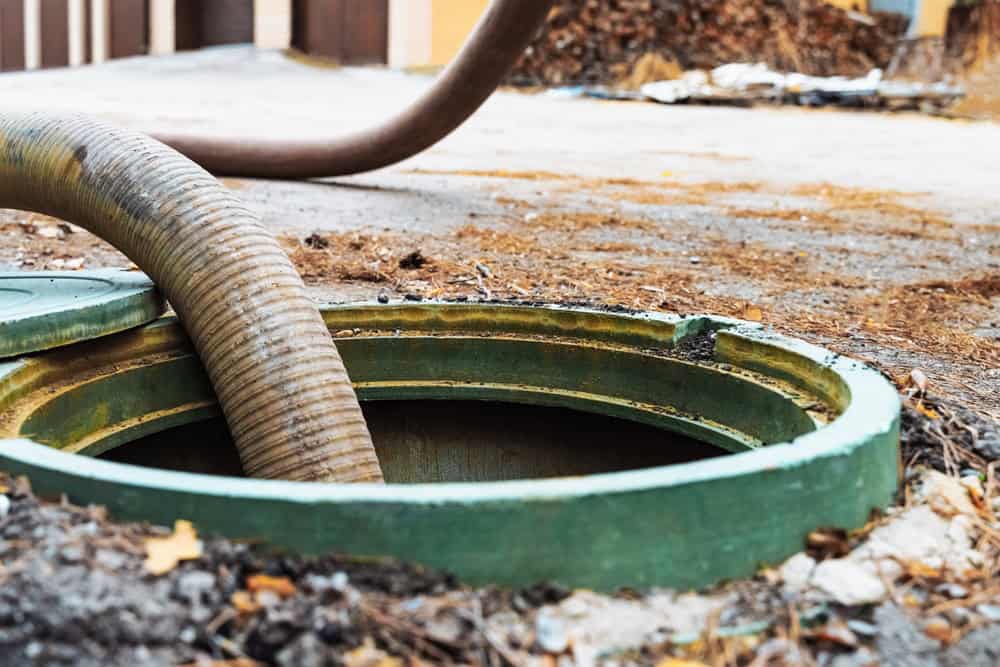
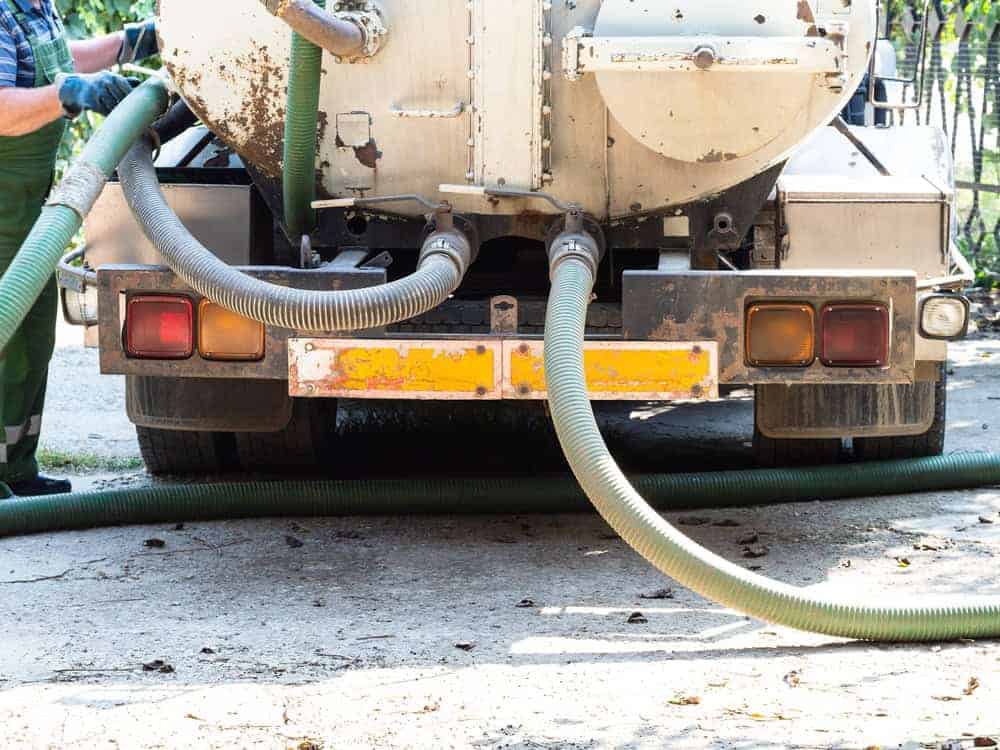
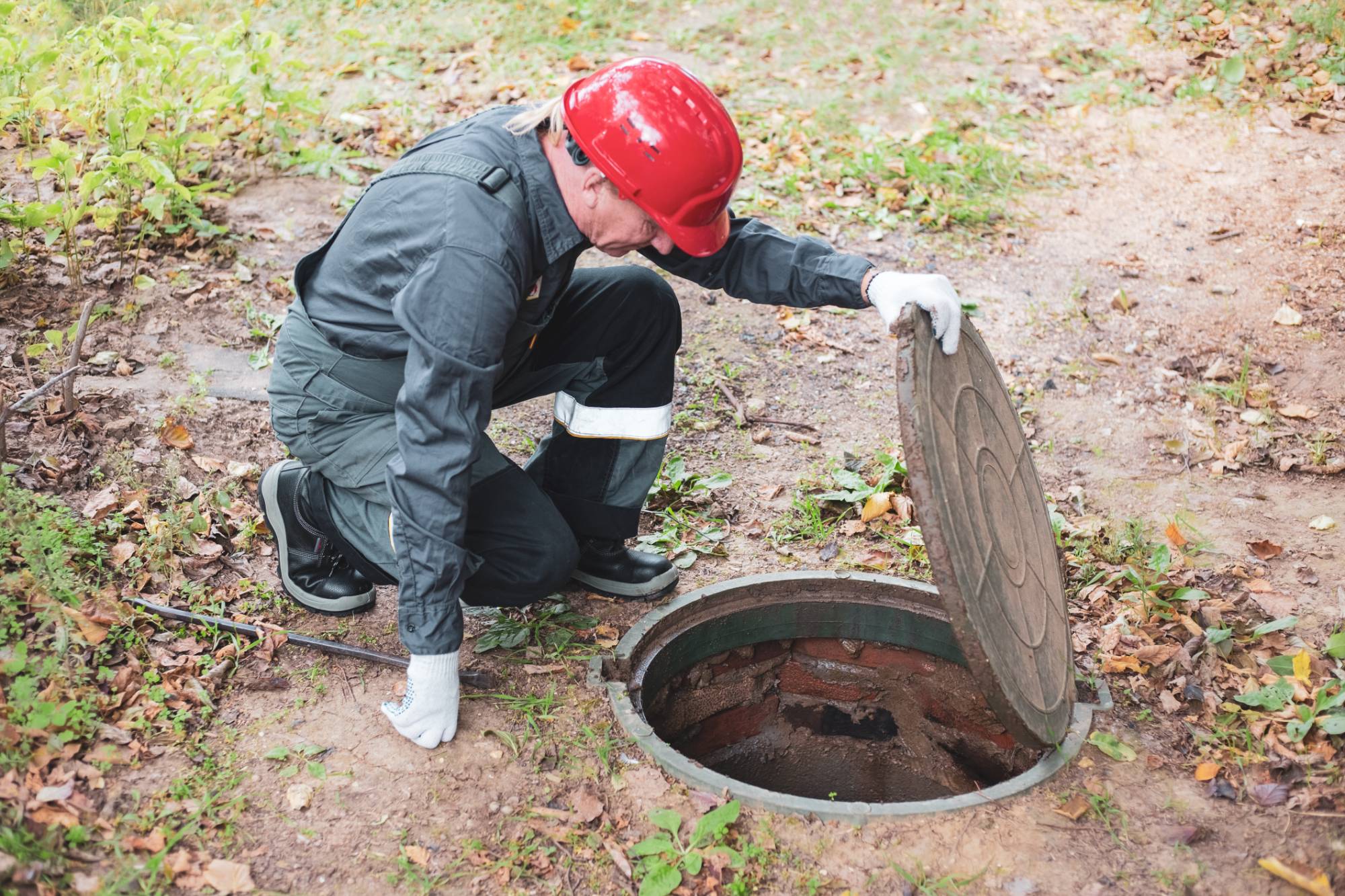
The process starts with locating and exposing the tank access points. Once the lids are off, we measure sludge and scum depths — this gives a baseline sense of how long it’s been since the last service and how hard the system has been working. From there, a vacuum truck extracts everything: solids, sludge, and liquid. A full cleanout, not just the liquid layer.
After the tank is emptied, we backwash the walls with water to dislodge any biofilm or caked-on material that the vacuum didn’t pull out. This is the step that separates a thorough cleaning from a quick pump-and-go. The inlet and outlet baffles are checked visually while the tank is accessible, and any obvious structural issues — cracks, root intrusion, damaged risers — are noted.
All waste is then transported to a licensed disposal facility. In Suffolk County, this matters — the county’s sole-source aquifer supplies drinking water to roughly 1.5 million residents, and responsible waste handling isn’t just good practice, it’s legally required. Any company operating in Suffolk County should hold a New York State Waste Transporter Permit and a Suffolk County Liquid Waste License under Article VII of the Suffolk County Code. If a company can’t confirm those credentials, that’s worth paying attention to.
Cleaning typically takes one to two hours for a standard residential tank. For households with a garbage disposal, larger families, or systems that haven’t been serviced in more than five years, the process may take longer and may reveal buildup that requires additional attention. The general guideline is cleaning every three to five years, with every three years being the standard for a typical three-bedroom home. If your system hasn’t been touched in longer than that, the cleaning itself will tell you a lot about what’s been happening inside the tank.
Do You Need Septic Cleaning Before an Inspection?
This is one of the most common questions homeowners ask, and the short answer is: often, yes — and here’s why it matters.
When a tank is full of solids, the technician performing the inspection can’t see the internal components clearly. The baffles, the tank walls, the inlet and outlet connections — all of it is obscured. An inspection performed on a full tank is necessarily incomplete. You might get a general sense of whether the system is backing up, but you won’t get an accurate picture of component condition or structural integrity.
For real estate transactions in Suffolk County, this is especially relevant. If a buyer’s attorney or lender requires a certified inspection report, that report needs to reflect a system that was actually visible during the evaluation. A tank that was full during the inspection introduces ambiguity into the documentation — and ambiguity in a real estate transaction tends to cause delays.
The practical approach for most homeowners — and particularly for anyone going through a home sale — is to schedule both services together. Clean the tank first, then inspect it while everything is accessible and visible. This is more efficient, produces better documentation, and means you’re only coordinating one visit rather than two. For sellers, it also gives you the opportunity to address any findings before the buyer’s inspector shows up, rather than negotiating repairs under deadline pressure.
It’s also worth noting that cleaning and inspection serve different purposes even when they’re done at the same time. Cleaning restores the tank’s capacity. Inspection evaluates the system’s health. One doesn’t replace the other, and doing both isn’t redundant — it’s thorough. For Suffolk County homeowners managing systems that are twenty, thirty, or forty years old, thorough is exactly what the situation calls for. An aging system that’s been cleaned but never properly inspected is a system whose real condition is still unknown.
Getting Both Services Done Right in Suffolk County
The simplest way to think about this: cleaning takes care of what’s in the tank, and inspection tells you whether the tank — and everything connected to it — is still doing its job. You need both, and you need them done by someone who understands what they’re actually looking at.
Suffolk County’s regulatory environment, its aging housing stock, and its sole-source aquifer make this more consequential here than in most places. A system that’s overdue for service isn’t just an inconvenience. In this county, it’s a liability — financially, legally, and environmentally.
We’ve been doing this work on Long Island since 1980. We handle inspection, cleaning, repair, and full system installation, which means you’re not coordinating multiple vendors or starting over with someone new if a problem turns up. If you’re not sure where your system stands, reaching out for a free estimate is a straightforward first step.