Summary:
You just got a quote. Maybe it was $18,000. Maybe it was $35,000. And now you’re sitting there wondering whether that number is normal, whether you actually need everything the contractor recommended, and whether there’s any way to make this less painful financially.
Those are the right questions to ask. On Long Island, septic installation costs vary significantly based on your county, your soil, your proximity to water, and the type of system required under current regulations. There’s also a grant program that can cover a substantial portion of the cost — sometimes all of it — that a surprising number of homeowners never find out about until after the job is done.
Here’s what you actually need to know before you sign anything.
Septic System Installation Costs on Long Island: What the Numbers Actually Look Like
The national averages you’ll find on most home improvement sites don’t apply here. Long Island labor rates are higher, local permitting adds real costs, and the type of system your property requires under Suffolk County regulations can push the total well above what a homeowner in another state would pay.
For a complete septic system installation in Suffolk County, a realistic range is $15,000 to $35,000, and a conventional septic tank with a leach field typically runs $10,000 to $25,000. But if your property is in a designated area near coastal waters, Long Island Sound, or other sensitive zones — which covers a large portion of Suffolk County — you may be required to install an Innovative and Alternative Onsite Wastewater Treatment System, commonly called an I/A OWTS. A full I/A OWTS installation generally falls in the $15,000 to $25,000 range before grants, and can reach $40,000 on difficult sites, plus engineering and design work.
Before any of that begins, you’ll need a percolation test, which costs between $700 and $2,000, and a residential septic installation permit from the Suffolk County Department of Health Services, which runs $300 to $650. Those are costs that apply regardless of which system type ends up being right for your property.
What else moves the price. Suffolk County banned new cesspool-only installations on July 1, 2019, so any failing system that needs replacement must include at minimum a conventional septic tank ahead of the leaching structure. New construction and major renovations that cost more than 50% of a home’s market value require an I/A OWTS. Site conditions matter too: a property near the coast or in a low-lying area may have a high water table that calls for a mound system, which can push costs to $20,000 to $30,000 or beyond. Much of Suffolk County has sandy glacial soil that excavates faster than dense clay, but that same soil lets effluent move quickly into the ground, which is why the nitrogen-reducing mandate exists.
Septic Tank Installation Costs by System Type: Conventional vs. I/A OWTS
The single biggest variable in your final cost is whether you need a conventional system or a nitrogen-reducing I/A OWTS. Understanding why that distinction exists — and how it applies to your specific property — is the difference between a well-planned project and a surprise bill halfway through the permitting process.
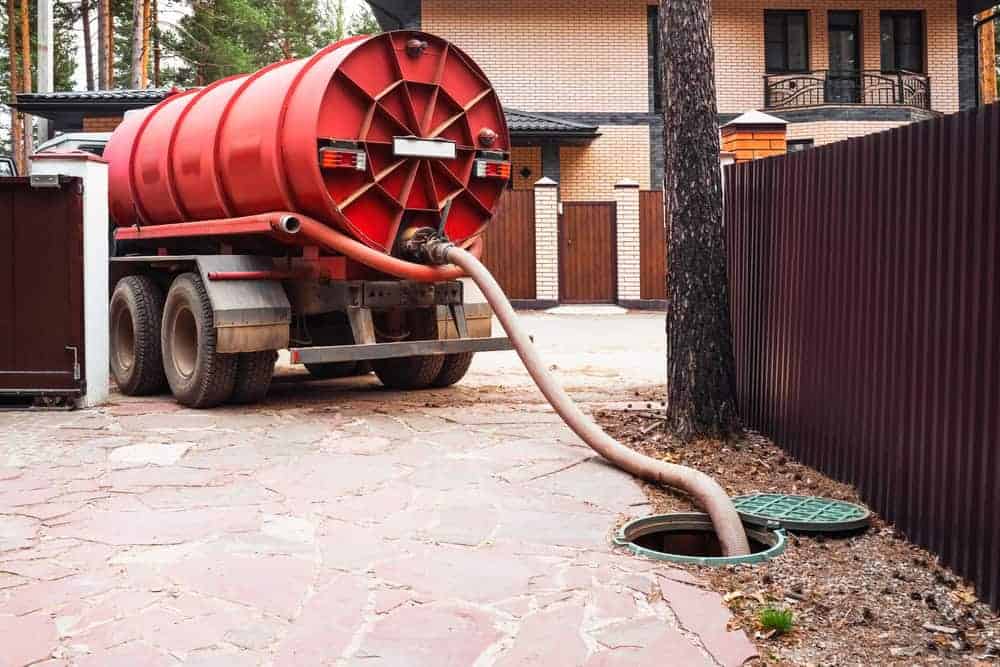
Conventional gravity-fed systems are the simpler, less expensive option. They work by directing wastewater from the home into a septic tank where solids settle out, and then into a drain field where the liquid effluent filters through the soil. On Long Island, these systems typically run $10,000 to $25,000 installed, depending on the size of the home and the site conditions.
I/A OWTS systems were developed specifically to address Long Island’s nitrogen pollution problem. More than 360,000 homes in Suffolk County still rely on outdated cesspools and septic systems that don’t properly treat nitrogen before it reaches the groundwater. Because Long Island sits entirely on a sole-source aquifer — meaning the island’s drinking water comes entirely from underground — nitrogen contamination from failing systems has caused real, documented harm: beach closures, shellfish harvesting restrictions, toxic algae blooms.
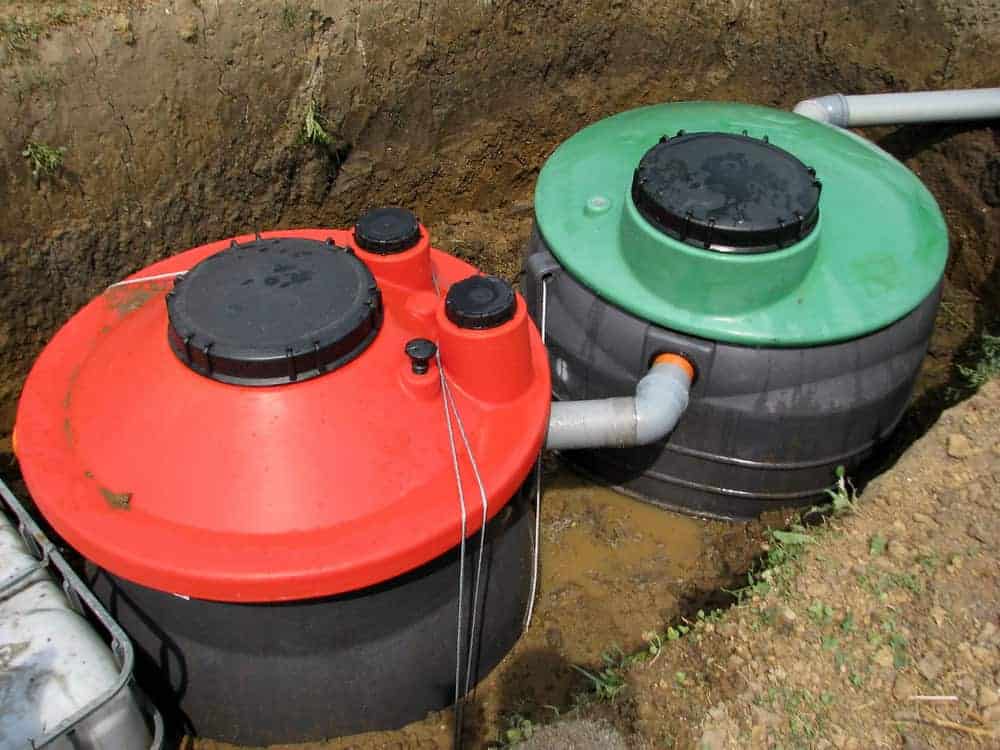
The I/A OWTS systems required in high-priority areas remove approximately 70% of nitrogen from wastewater before it reaches the ground, compared to traditional cesspools that remove almost none. These systems cost more — generally $15,000 to $25,000 before grants, plus engineering — but here’s the part that changes the conversation entirely: as of July 2025, Suffolk County residents may be eligible for combined State and County grants of up to $45,000 to install an I/A OWTS system.
Many homeowners who receive a quote for a $15,000 to $25,000 nitrogen-reducing system and assume they can’t afford it don’t realize the grant could cover the entire cost. Nassau County has a separate grant program as well, offering up to $20,000 for eligible homeowners. The catch is timing: you must apply for and receive grant approval before installation begins, and you also need to use an installer from the program’s approved list to qualify. If a contractor starts work before you’ve secured the grant, you’ve lost the money.
Septic Tank Installation Contractors: What to Look For Before You Hire
Choosing the right contractor matters more on this type of project than almost any other home improvement job you’ll undertake. You’re talking about a permitted installation that requires sign-off from the Suffolk County Department of Health Services, a system that will be tied to your property’s deed, and a project where cutting corners creates liability that follows the home — not the contractor — if you ever sell.
The first thing to verify is licensing. In Suffolk County, septic system installation requires a contractor licensed by the SCDHS. This isn’t a formality — unlicensed work won’t pass inspection, and a permit application submitted without a valid contractor license number will be rejected outright. Ask for the license number before you agree to anything.
Second, get everything in writing. One of the most common complaints in this industry is contractors who give verbal estimates that bear no resemblance to the final invoice. A reputable contractor will give you a written, itemized estimate before any work begins — not a ballpark, not a range, a real number that accounts for the specific conditions of your property.
Third, ask explicitly whether the contractor is familiar with the Suffolk County Septic Improvement Program and whether they can help you apply for grant funding before the project starts. A contractor who handles this regularly will know the application process, the approved system list, and the timing requirements. One who stumbles on the question or waves it off may not be the right fit for a project of this scale.
Finally, ask about the permit timeline. SCDHS permit review for septic installations can take four to eight weeks or longer. Any contractor promising a faster turnaround than that without a clear explanation of how they’re managing the timeline is worth questioning.
What should be in the quote. One of the most common sources of confusion in Suffolk County is why quotes vary so much. A $12,000 quote and a $22,000 quote for what sounds like the same job are often quoting different scopes, or different system types entirely. Some contractors quote conventional systems that may not meet current county requirements for your situation; others quote an I/A OWTS that does. Some quotes include soil testing and permit fees, and some include site restoration after excavation while others list it separately. A complete installation quote should include the initial site evaluation, perc test and soil testing, system design, all permit applications and SCDHS coordination, excavation, tank and drain field installation, final inspection, and site restoration. If a quote is missing any of those, the final number will be higher than what’s on paper.
We’ve been doing this work on Long Island since 1980, and we handle the entire permit process as part of every installation: soil testing, SCDHS applications, inspection scheduling, all of it. We also provide written estimates upfront with no hidden fees, because a $20,000 surprise at the end of a job helps nobody.
Do You Actually Need Septic Tank Installation on Long Island?
This is the question most cost guides skip, and it’s the one that matters most if you’ve just been told by a contractor that you need a full replacement.
Sometimes full installation is the only legitimate path forward. If your system is at or past 25 to 30 years old and showing active failure symptoms, replacement is likely the right call. If your cesspool has failed in Suffolk County, you no longer have the option to replace it with another cesspool — the 2019 cesspool installation ban eliminated that option, and any replacement must be a full septic system or an I/A OWTS.
But slow drains, occasional odors, or a system that’s overdue for pumping don’t automatically mean you need a $25,000 installation. Those symptoms can indicate that a pump-out, a repair, or a component replacement is all that’s needed. The honest answer depends on an actual inspection — not a contractor’s financial interest in selling you the biggest job.
When Is Cesspool-to-Septic Conversion Actually Required on Long Island?
Most Long Island homeowners asking about septic installation aren’t starting from scratch — they have an existing cesspool that’s either failing or flagged during a home inspection, and they’re trying to understand what comes next.
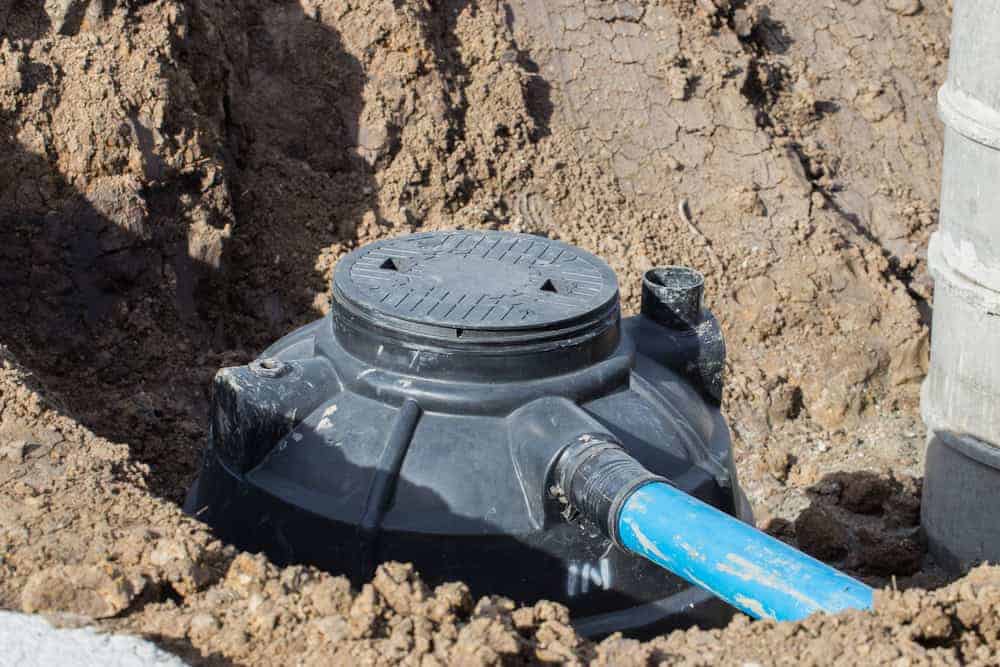
Here’s the regulatory reality as it stands in 2026. Since 2019, Suffolk County has prohibited the installation of new cesspools. If your existing cesspool fails and needs to be replaced, you cannot simply swap it for another cesspool. You must upgrade to a full septic system or, depending on your location, an I/A OWTS nitrogen-reducing system. This applies across the county, not just in coastal zones.
The trigger for conversion is typically one of three things: a failed system that’s backing up or saturating the soil above it, a mandatory inspection tied to a home sale, or a proactive decision to apply for grant funding before the system fails on its own. That third scenario is worth taking seriously. Homeowners who wait until the system fails lose control of the timeline, the contractor selection process, and sometimes the ability to apply for grants before installation begins.
If your cesspool is more than 20 years old and you’re in a part of Suffolk County near the water — Hauppauge, Patchogue, Oyster Bay, and many other towns across the island all have properties that fall into regulated zones — it’s worth getting an honest assessment now rather than waiting for an emergency to force the decision.
How Long Does Septic Installation Take on Long Island, From Permit to Completion?
Timeline is one of the most anxiety-producing parts of this process, especially for homeowners dealing with an active system failure. Understanding the realistic sequence helps set expectations and avoid the frustration of feeling like nothing is moving.
The permitting process is the longest phase. After a soil evaluation and percolation test are completed — both of which must be performed by a licensed professional, not self-administered — the permit application goes to the SCDHS for review. That review typically takes four to eight weeks, sometimes longer depending on the complexity of the site and the current volume of applications. There’s no shortcut here.
Once the permit is issued, the physical installation itself is generally a matter of days, not weeks. Excavation, tank placement, drain field construction, and system connection can often be completed within a week for a standard residential property, assuming no unexpected soil conditions or site access issues arise.
If you’re applying for the Suffolk County Septic Improvement Program grant, add the grant application and approval period to the front end of that timeline. You cannot begin installation until the grant is approved, so starting the application process early — before the system reaches a point of active failure — gives you the most flexibility.
The full timeline from initial assessment to a functioning installed system, including permitting and grant processing, commonly runs three to five months for homeowners who plan ahead. For those responding to an emergency failure, the process can feel compressed and stressful. That’s one more reason to get ahead of it when you can.
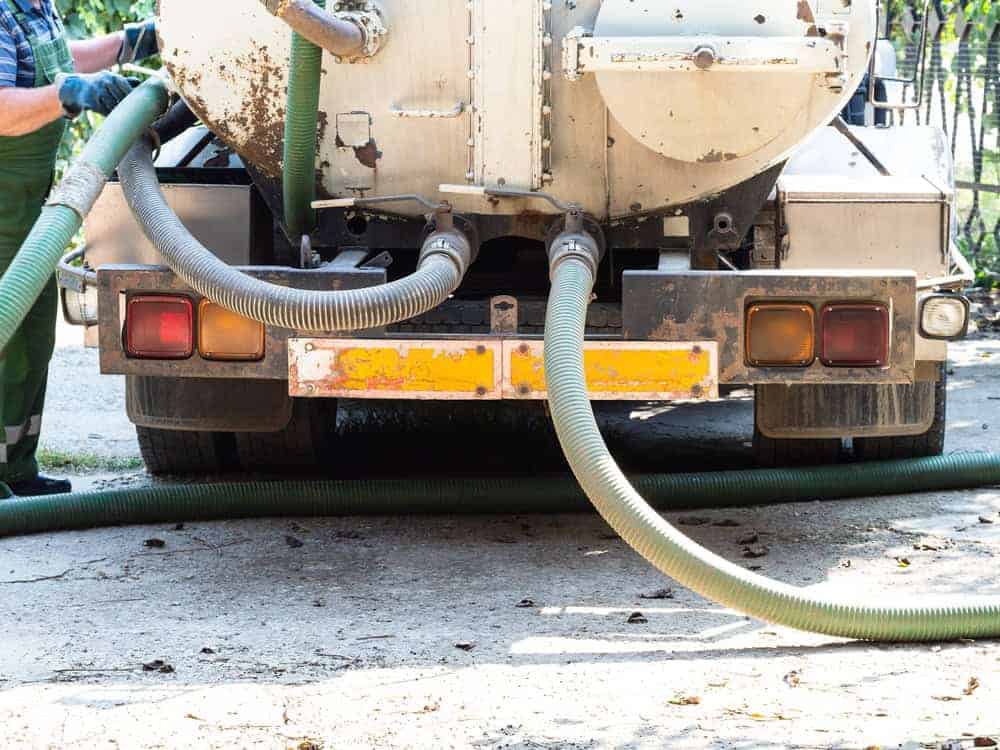
What to budget after installation. Installation is the big upfront number, but ongoing maintenance is what protects that investment over the next 20 to 30 years. For a conventional septic system, pumping and cleaning every one to three years is standard practice. In Suffolk County, residential septic tank cleaning typically costs between $300 and $600 per service, depending on tank size and site access. That is a manageable recurring cost compared to the $5,000 to $7,000 or more of a system failure caused by neglected maintenance. I/A OWTS systems need a bit more attention: because they use active mechanical and biological treatment to remove nitrogen, they require periodic inspection and servicing under a maintenance contract. That is a requirement, not an option, and it is a known, budgetable expense rather than an emergency. When we pump and clean a septic tank, we also do a system health assessment, measuring sludge and scum layers and checking the inlet and outlet baffles, so problems get flagged before they become failures.
Getting an Honest Septic Installation Assessment on Long Island
The cost of septic tank installation on Long Island in 2026 typically runs from $15,000 to $35,000 depending on system type and site conditions — but with Suffolk County grants now reaching up to $45,000, the out-of-pocket cost for many homeowners can be dramatically lower than the sticker price suggests. The key is knowing what type of system your property actually requires, whether installation is genuinely necessary or whether repair is the right call, and how to time the grant application so you don’t lose eligibility.
What most homeowners need before any of that is a straight answer from someone who knows Long Island’s soil, its regulations, and the difference between a system that needs service and one that needs replacement.
We’ve been doing this work on Long Island since 1980. If you have questions about what your situation actually requires — or you want a written estimate before you commit to anything — give us a call at 631-250-6829 or reach out for a free quote.