Summary:
You catch a whiff of something foul in the basement — rotten eggs, maybe something worse — and then it’s gone. A few days later, it’s back. You pour some water down the floor drain, and it seems to clear up. Then it returns again a week later.
It’s easy to tell yourself it’s nothing. But the fact that it keeps coming back is exactly the reason to pay attention. Intermittent odors like this follow a pattern, and that pattern usually points to a specific cause. Some of those causes are simple. Some aren’t. Here’s how to tell the difference.
What Causes Sewer Smell in the Basement to Come and Go?
The short answer is that intermittent sewer smell almost always comes down to one of three things: a drying P-trap, a partially blocked vent pipe, or a cesspool that’s under pressure but not yet backed up. Each one creates conditions where gas escapes into the home sometimes — but not constantly — depending on temperature, humidity, water usage, and other shifting factors.
That variability is what makes the problem easy to rationalize. The smell disappears and life moves on. But the underlying cause doesn’t fix itself between appearances. It either stays the same or slowly gets worse.

Basement Smells Like Sewer Gas? A Dry P-Trap Is Usually the First Thing to Check
Every drain in your home — floor drains, laundry tubs, utility sinks — has a curved section of pipe beneath it called a P-trap. That curve holds a small amount of water, and that water is what blocks sewer gas from drifting back up through the drain and into your living space. It’s a simple mechanism, and it works well as long as the water stays there.
The problem is that water evaporates. In a basement drain that doesn’t get used regularly — which describes most basement floor drains on Long Island — that water seal can disappear in as little as two to four weeks. In winter, when basements are drier and heating systems pull moisture from the air, it can happen even faster. Once the seal is gone, there’s nothing standing between your basement and the sewer gas below.
This is why the smell tends to come and go rather than linger constantly. The drain sits unused, the P-trap dries out, gas seeps in, and you notice it. You pour water down the drain, the seal refills, and the smell clears up. A few weeks later, the cycle repeats.
If that’s your situation, the fix really is as simple as running water down the drain every few weeks to keep the trap full. Some people add a small amount of cooking oil on top of the water to slow evaporation — it floats on the surface and reduces how quickly the seal dries out between uses.
But here’s the part most DIY articles leave out: if the smell comes back within a day or two of refilling the trap, the problem isn’t evaporation. Something else is pushing that gas back through — and that’s when you need to look deeper.
Basement Shower Drain Smells Like Sewer? Here's Why It Keeps Coming Back
A basement shower drain that smells like sewer is a slightly different situation, and it gets misdiagnosed often. The instinct is to clean the drain — pull out the hair, scrub the biofilm, maybe run some drain cleaner through it. That can help temporarily, but if the smell keeps returning, cleaning the surface isn’t solving the actual problem.
Basement shower drains tend to sit unused for long stretches, which means the P-trap dries out just like a floor drain would. But there’s another factor that’s specific to showers: the drain sits low in the home, which makes it the path of least resistance when there’s back-pressure anywhere in the system. If a vent pipe is partially blocked — by debris, a bird nest, or seasonal buildup — the pressure that would normally escape through the roof gets redirected. It finds the lowest open point, which is often that basement shower drain, and gas pushes back through.
On Long Island, there’s a third possibility that doesn’t get mentioned in most plumbing guides: a cesspool that’s approaching capacity. When a cesspool is running full — say, 60 to 70 percent of its total volume — it doesn’t always back up dramatically. Instead, it creates intermittent pressure fluctuations in the drain lines connected to it. That pressure pushes gas back toward the house, and the basement shower drain, being the lowest fixture in the system, is often the first place it shows up.
Most Long Island homes in Nassau and Suffolk Counties run on cesspools, not municipal sewer. That changes the diagnostic picture entirely. A plumber looking only at the drain fixture may miss what’s actually happening further down the line. If you’ve cleaned the drain, refilled the trap, and the smell keeps coming back — especially if you notice it more after heavy water use or after a rainstorm — the cesspool is worth investigating.
Sewage Smell in the Yard: What It Means When the Odor Moves Outside
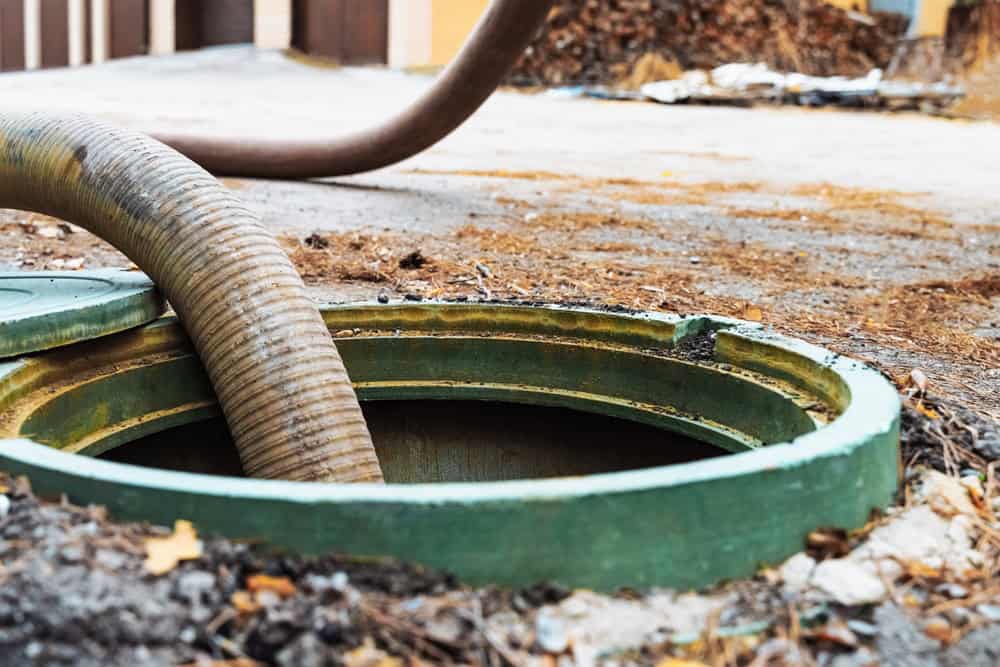
An intermittent smell inside the basement is one thing. Sewage smell in the yard is a different conversation. When the odor moves outdoors — especially near where your cesspool is located — it’s a sign that the system is no longer containing what it should.
Outdoor sewage smell typically means the cesspool is overflowing, the leach field is saturated, or both. At that stage, the system isn’t just stressed — it’s failing. And on Long Island, where over 252,000 cesspool-only systems are still operating across Suffolk County, that’s not a rare scenario.
What Does Sewage Smell in the Yard Actually Indicate?
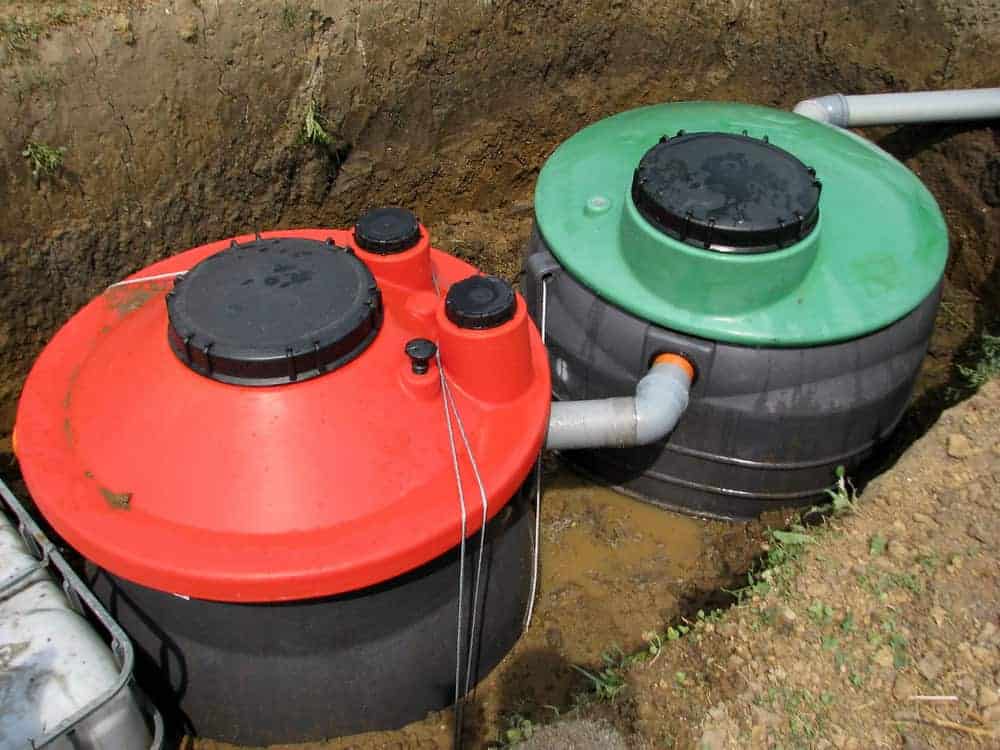
Most cesspools on Long Island hold between 1,000 and 1,500 gallons. They’re designed to handle a certain volume of waste, and they work well when pumped and maintained on a regular schedule. When they’re not, solids accumulate, capacity shrinks, and the system starts pushing effluent into the surrounding soil faster than the soil can absorb it.
When that happens, the saturated ground releases odors at the surface. You might notice it as a general sewage smell near the back of the yard, or you might notice it more specifically after heavy rain — rainfall agitates the effluent and brings it closer to the surface, which is why the smell often spikes after a storm. Other signs that tend to accompany outdoor sewage odor include unusually green or lush patches of grass directly above the cesspool or leach field area, soggy ground that stays wet even in dry weather, and slow drains throughout the house.
This is the point on the severity ladder where waiting stops being a reasonable option. A cesspool that’s overflowing isn’t going to recover on its own. Under Suffolk County’s regulations — which changed significantly in July 2019 — a cesspool that fails and requires full replacement must meet higher standards than the old system it replaces. That means the cost of ignoring a warning sign long enough for the system to fail completely is substantially higher than the cost of addressing it while it’s still serviceable.
Why the Smell "Going Away" Doesn't Mean the Problem Did
This is the part that most homeowners don’t know, and it matters: hydrogen sulfide — the gas responsible for the rotten egg smell — causes olfactory fatigue at higher concentrations. That means your nose stops detecting it even when it’s still present. The smell doesn’t disappear because the gas cleared out. It disappears because your sense of smell adapted to it.
At low concentrations, hydrogen sulfide is detectable at levels as small as 0.0005 parts per million — it’s one of the most sensitive smell thresholds of any gas. But as concentrations climb, the ability to detect it fades. At very high levels, exposure can cause headaches, eye irritation, and fatigue before a person even realizes the gas is building up. This isn’t a common outcome from a dry P-trap, but it’s a real risk when there’s a significant system failure involved and the odor is concentrated in an enclosed basement space.
The practical takeaway is straightforward: if the smell in your basement comes and goes, don’t use its absence as evidence that the problem resolved. The conditions that caused it are still there. A drying P-trap will dry out again. A partially blocked vent won’t clear itself. A cesspool that was approaching capacity last week is still approaching capacity this week, just a little closer to the edge.
Long Island’s housing stock makes this especially relevant. A large portion of the homes across Nassau and Suffolk Counties were built between the 1940s and 1970s — which means the cesspools serving those homes are anywhere from 50 to 80 years old. Aging systems don’t fail all at once. They give off signals first. An intermittent smell in the basement is one of those signals, and it’s worth taking seriously before it becomes something harder to ignore.
When to Stop Waiting and Get a Cesspool Inspection
If the smell cleared up after you ran water down the drain and hasn’t returned, you may be dealing with nothing more than a dry P-trap. Keep the trap wet and monitor it. But if the smell keeps coming back — especially if it’s getting more frequent, if you’re noticing it in the yard, or if drains throughout the house are running slow — that’s a pattern worth having someone look at.
The difference between a minor fix and a major repair often comes down to how early you catch it. A cesspool that’s flagged during a routine inspection is a manageable situation. One that gets ignored until it backs up or overflows is a significantly more expensive and disruptive problem to solve.
If you’re on Long Island and you’re not sure whether what you’re dealing with is a plumbing fixture issue or something happening further down the line, we can help you figure that out. We’ve been working on Long Island cesspools since 1980, and we’re available at 631-250-6829 if you’d like a straight answer about what’s going on.