Summary:
You walk into your basement bathroom and get hit with that unmistakable rotten egg smell. Maybe it’s been there for a few days. Maybe it showed up right after a rainstorm. You poured some water down the floor drain, the smell faded for a day, and then it came back. Now you’re wondering whether this is a five-minute fix or a five-thousand-dollar problem.
The honest answer is: it depends. And the only way to know for sure is to understand what you’re actually dealing with. This guide walks through the most likely causes — from the simplest to the most serious — so you can stop guessing and start making a smart decision.
What Causes Sewer Smell in a Basement Bathroom?
There’s no single cause of sewer smell in a basement bathroom — there are several, and they range dramatically in severity. The good news is that most of them follow a pattern you can work through logically, starting with the least serious and moving toward the ones that need professional attention.
The key is not to assume the worst right away — but also not to assume it’ll go away on its own. Sewer gas contains hydrogen sulfide and methane, both of which are genuinely hazardous at elevated concentrations. A faint, intermittent smell is worth investigating. A persistent or worsening smell is worth acting on quickly.
The Most Common Culprit: A Dry P-Trap
Every drain in your home — floor drains, sinks, showers, toilets — has a P-trap, which is a curved section of pipe that holds a small amount of water. That water acts as a seal, blocking sewer gases from traveling back up through the drain and into your living space. It’s a simple system, and it works reliably as long as the water stays in the trap.
The problem is that water evaporates. In a basement bathroom that doesn’t get used often — a guest toilet that nobody flushes, a floor drain that hasn’t seen water in months — the trap can dry out completely. Once that seal is gone, there’s nothing standing between your basement and the sewer gas below.
This is the most common cause of sewer smell in a basement bathroom, and it’s also the easiest to rule out. Run the sink, flush the toilet, and pour a slow, steady stream of water down the floor drain for about thirty seconds. If the smell clears up within a day and doesn’t come back, a dry P-trap was almost certainly the culprit. If the smell returns within 24 to 48 hours of refilling the trap, the floor drain is not the source — it’s just where the gas is escaping. The real problem is somewhere further down the line.
In basements that stay warm and dry year-round, P-trap evaporation can happen faster than you’d expect. A floor drain that gets water poured down it every three to four months is usually enough to maintain the seal. If your basement has been closed up for a season, that’s often all it takes for the smell to appear.
When the Simple Fix Doesn't Work: Blocked Vents, Cracked Pipes, and Ejector Pump Issues
If the P-trap fix doesn’t hold, you’re dealing with something that needs a closer look. The next most common causes are a blocked vent stack, a cracked drain pipe, or a problem with the ejector pump — and each one behaves a little differently.
Your home’s drain-waste-vent system relies on a network of pipes that run up through the walls and out through the roof. These vent pipes do two things: they allow air into the drainage system so water flows freely, and they carry sewer gases safely out of the house. When a vent gets blocked — by a bird’s nest, debris, or ice in the winter — the system loses its pressure balance. Drains gurgle. Water drains slowly. And sewer gas that should be venting upward gets pushed back down into the lowest fixtures in the house, which are almost always in the basement.
A cracked or deteriorating drain pipe is another possibility, especially in older Long Island homes built in the 1950s through the 1970s. Cast iron pipes from that era can corrode over decades, developing hairline cracks or joint failures that allow sewer gas to seep into the surrounding space before it ever reaches a drain opening.
Then there’s the ejector pump. Basement bathrooms that sit below the main sewer line rely on an ejector pump to push waste upward into the system. The pump sits in a sealed pit, and that seal matters — if the lid isn’t seated properly, if the vent pipe for the pit gets blocked, or if the seal degrades over time, sewer gas escapes directly into the basement. It’s a less obvious source, but it’s worth checking if the smell seems to be coming from a specific corner of the basement rather than a drain.
None of these causes are DIY repairs. A blocked vent requires someone to get on the roof and clear it safely. A cracked pipe needs to be located — often with a camera inspection — before it can be repaired. And an ejector pump issue requires someone who knows the system to diagnose it correctly without making things worse.
Basement Smells Like Sewage After Rain? Here's Why That Happens on Long Island
If you’ve noticed that the smell in your basement gets noticeably worse after a heavy rainstorm, you’re not imagining it — and it’s not a coincidence. This is one of the most common patterns we see on Long Island, and it has a specific cause that’s tied directly to how cesspools interact with the local water table.
Long Island sits on a glacial outwash plain with sandy, relatively permeable soil. That soil drains well under normal conditions, but it has a shallow water table — particularly along the South Shore in communities like Bay Shore, Islip, Massapequa, Lindenhurst, and Freeport. When significant rainfall comes through, the water table rises. And when it rises into or near the drainage zone around your cesspool’s leaching field, the cesspool loses its ability to drain liquid waste into the surrounding soil.
How a Full or Overwhelmed Cesspool Forces Sewer Gas Into Your Basement
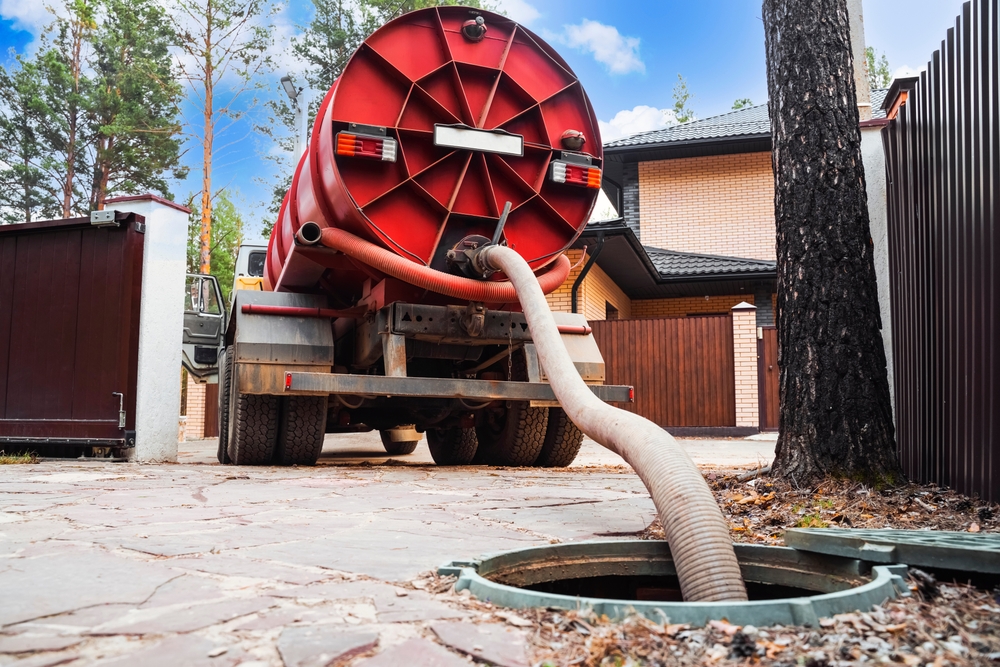
Here’s the mechanism that most national plumbing articles never explain, because they’re written for homes on municipal sewer systems: when your cesspool’s drainage field becomes saturated — either from being genuinely full or from the surrounding soil being too waterlogged to accept more liquid — the liquid level inside the cesspool rises. As it rises, it compresses the gas space above it. That gas has to go somewhere, and it takes the path of least resistance, which is back up through your plumbing. The lowest fixtures in your home are the first to feel it. That means the basement bathroom toilet, the basement floor drain, and the ejector pump pit.
This is why the smell often appears or intensifies within 12 to 24 hours of a heavy rain event. It’s not the rain itself causing the smell — it’s what the rain does to the soil around your cesspool and the system’s ability to drain properly.
Many Long Island homes are dealing with cesspool systems that were installed in the 1950s or 1960s, which means they’re 60 to 70 years old. An aging system that was barely keeping up before a wet season can tip into backup territory quickly once the water table rises. The sewer smell in the basement is often the first sign that a system is approaching the end of its functional capacity — not a dramatic backup or a flooded yard, just a smell that shows up after rain and takes a few days to fade.
If this pattern sounds familiar — the smell comes after rain, lingers for a day or two, and then fades until the next storm — that’s a warning worth taking seriously. It means your cesspool is telling you something, and the message gets clearer with each storm.
Why Basement Floor Drain Smells Like Sewage: A High-Priority Warning Sign
Of all the places sewer gas can show up in a home, the basement floor drain is the one that deserves the most attention. Here’s why: the floor drain sits at the absolute lowest point of your home’s drainage system. It’s the first place sewer gas reaches when something is wrong below, and it’s often the only fixture showing symptoms before things get worse.
When the floor drain smells like sewage even after you’ve ruled out a dry P-trap — meaning you’ve poured water down it and the smell returned quickly — the problem is upstream of that drain. It could be a venting issue, a cracked pipe, or a cesspool that’s backing up. But the floor drain is the canary in the coal mine, and dismissing it as a minor nuisance is a mistake.
There’s also a safety dimension worth understanding. Sewer gas is a mixture of gases, and two of them are particularly concerning. Hydrogen sulfide — the compound responsible for the rotten egg smell — is heavier than air, which means it sinks and accumulates at floor level in enclosed spaces like basements. At low concentrations it’s unpleasant. At higher concentrations, it’s toxic. What makes it especially deceptive is that at elevated levels, it actually paralyzes the olfactory nerve — meaning you stop being able to smell it precisely when it becomes most dangerous.
Methane is the other concern. It’s colorless, odorless, and lighter than air, but it’s flammable and can reach explosive concentrations in an enclosed basement with poor ventilation. If the floor drain smell is persistent, if it keeps returning after you’ve refilled the trap, or if you’re noticing gurgling sounds from the toilet or slow drainage throughout the house at the same time, those are the signs that point toward a cesspool issue rather than a simple plumbing fix.
At that point, the right call is a professional inspection — not because we want to manufacture urgency, but because those specific symptoms together have a clear and well-understood cause that doesn’t resolve on its own.
When to Call a Cesspool Professional About Sewer Smell in Your Basement
Start with the simple check: pour water down the floor drain and run any fixtures that don’t get regular use. If the smell clears and stays gone, you’ve solved it. If it comes back, or if it’s accompanied by gurgling drains, slow drainage throughout the house, or a pattern that worsens after rain, it’s time to bring in someone who can actually diagnose what’s happening below ground.
On Long Island, where the vast majority of homes run on private cesspool systems and the water table sits close to the surface in many communities, sewer smell in the basement bathroom is more often a cesspool signal than a plumbing one. That distinction matters — because the right fix depends entirely on the right diagnosis.
We’ve been working on Long Island cesspool systems since 1980. If you’re dealing with a smell that keeps coming back and you want an honest assessment of what’s causing it, give us a call at 631-250-6829 or request a free quote online. We’ll tell you what we find — not what’s most profitable to sell you.