Summary:
September hits and most Long Island homeowners are thinking about school schedules, yard cleanup, and maybe getting the gutters cleared before the leaves pile up. The cesspool or septic system? That’s usually the last thing on the list — right up until it isn’t.
Here’s the thing: fall is when systems that absorbed a summer of heavy use start showing the strain. Cooler ground, higher water tables, and slower microbial activity all change how your system performs. What seemed fine in August can look very different by October. We’ve covered the specific septic system problems that tend to surface in fall across Long Island, why the timing matters more than most people realize, and what you can do about it now.
Septic Tank Problems That Show Up After a Long Island Summer
Long Island summers are hard on septic systems. More people in the house, more laundry, more showers, more water going down the drain every single day — and your tank absorbs all of it without complaint. Until fall, when the conditions change and that accumulated stress starts to surface.
Cooler ground temperatures slow down the bacterial activity inside the tank. Bacteria are what break down solid waste, and when they slow down, sludge and scum layers build up faster than they would in warmer months. A tank that was managing fine in July can start showing sluggish performance by October — not because it suddenly got worse, but because the biology changed.
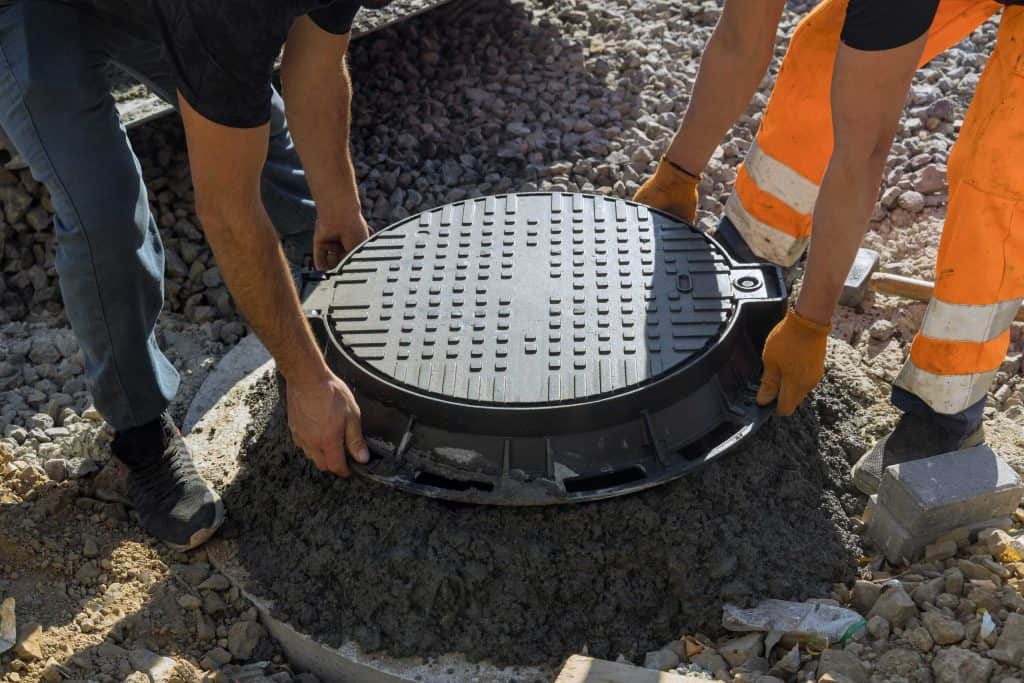
Why Slow Drains in Fall Mean Something Different Than in Summer
A slow drain in July is easy to write off. Maybe it’s a partial clog, maybe it’s just one fixture acting up. But when your drains are slow throughout the whole house in October — toilets, sinks, showers all moving sluggishly — that’s a different conversation.
Whole-house slow drains in fall typically point to a system-level issue, not a simple fixture clog. The most common culprits are a tank that’s approaching capacity, a clogged outlet baffle, or a drain field that’s struggling to absorb effluent because the surrounding soil is already saturated from fall rain. On Long Island, where groundwater levels naturally rise in the fall and winter, that soil saturation problem is especially common. High groundwater interferes with drain field absorption — the effluent has nowhere to go, so it backs up.
This is also when you might notice the toilet gurgling when the washing machine runs, or hear a bubbling sound from drains after a long shower. Those sounds are air being displaced in a system that’s under pressure. It’s not a plumbing quirk — it’s your system telling you something is wrong.
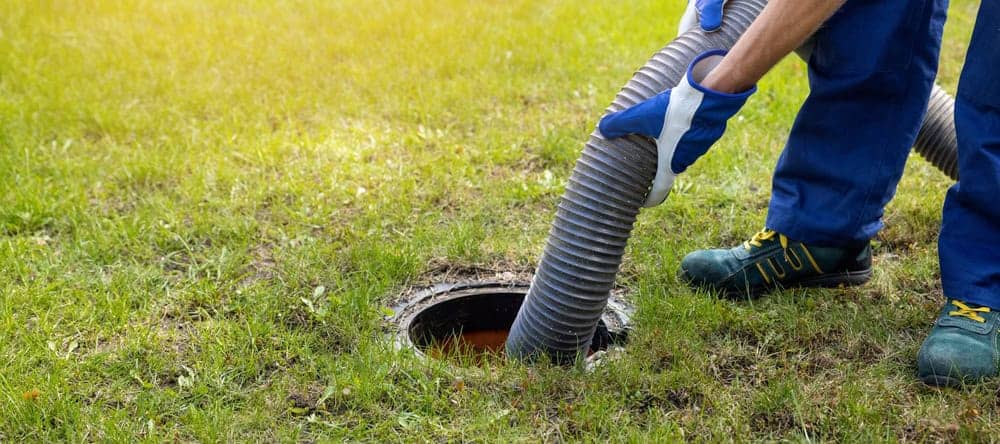
A system that was pumped two or three years ago but absorbed a particularly heavy summer — holiday weekends, out-of-town guests, extra laundry loads — may be overdue even if it’s not technically past the standard service interval. Families of four on Long Island typically need their cesspool or septic tank cleaned every two years. Homes with garbage disposals or heavier-than-average water use may need it annually. If your last service was before the summer rush, fall is a good time to check.
Septic Tank Not Draining? Here's What's Actually Happening in Fall
A septic tank not draining properly in fall is one of the more urgent problems you can have — not just because it’s inconvenient, but because of what it means for your repair options.
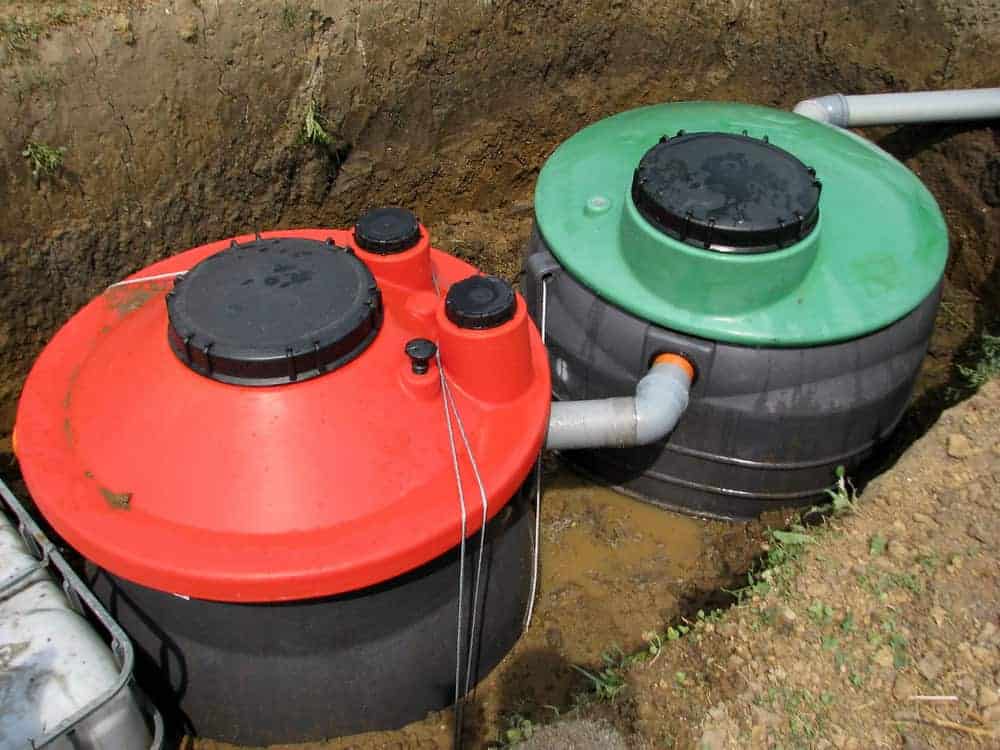
When a septic tank isn’t draining, the issue is usually one of three things: the tank itself is full and needs to be pumped, there’s a blockage in the pipe running from the house to the tank, or the drain field has failed and can no longer accept effluent. The first two are generally fixable with a service call. The third is a much bigger problem, and on Long Island, it’s a more expensive one than it used to be.
Since Suffolk County banned new cesspool installations in 2019 — and Nassau County followed with similar restrictions — homeowners who need to replace a failing system can no longer simply swap in a new cesspool. Any replacement now requires an Innovative/Alternative Onsite Wastewater Treatment System (I/A OWTS), which typically costs between $19,000 and $25,000, plus annual maintenance contracts. There are grant programs available — Suffolk County’s Septic Improvement Program combined with New York State funding offers up to $30,000 for eligible homeowners, and Nassau County offers up to $20,000 — but the process takes time and the costs are real.
The point isn’t to alarm you. The point is that catching a draining problem in October, when it’s still a repairable issue, is fundamentally different from discovering a failed drain field in December when the ground is frozen and your options are limited. A backup in December, when frozen ground makes access difficult, costs significantly more to address than the same problem caught in fall while the system is still accessible and repairs are still straightforward. Fall is the window. Once the ground freezes, that window closes.
Cesspool Problems Long Island Homeowners Face Every Fall
If your home was built before 1973 in Suffolk County, or if you’re in an older Nassau County neighborhood, there’s a good chance you have a cesspool rather than a full septic system. The distinction matters because cesspools and septic tanks fail in different ways, and the warning signs — while similar — have different underlying causes.
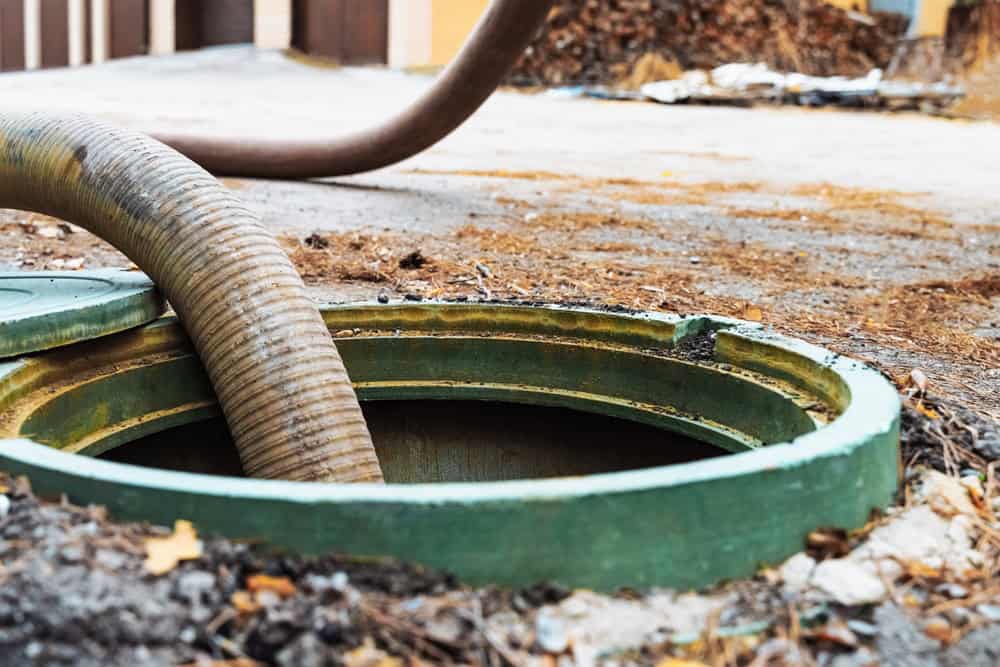
A cesspool is essentially a buried pit with perforated walls. Waste enters the pit, liquids seep out through the walls into the surrounding soil, and solids settle at the bottom. There’s no drain field. When the walls clog with biomat buildup or the surrounding soil becomes too saturated to absorb more liquid, the cesspool fills up and backs up into the house. Fall — with its rising groundwater and increased rainfall — is exactly when that soil saturation problem becomes critical.
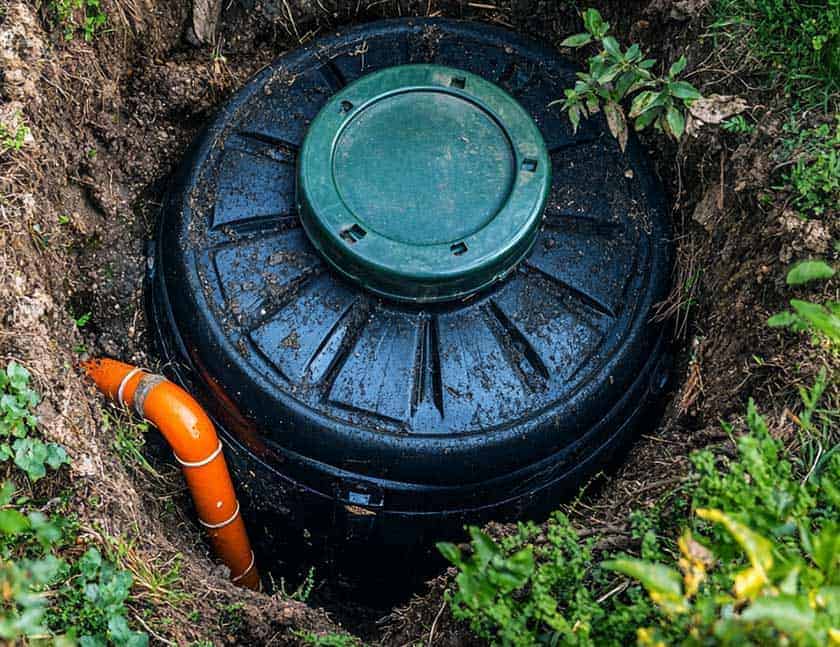
Warning Signs Your Cesspool Is Struggling as Temperatures Drop
The warning signs of a failing cesspool are easy to miss early on, and that’s exactly why they tend to catch homeowners off guard. Most cesspool failures don’t happen overnight. They build gradually, and the symptoms are easy to rationalize away — until they’re not.
The most common early signs are slow drains throughout the house, a gurgling or bubbling sound from toilets or drains, and a faint sewage smell in the yard or basement. That last one is particularly telling. One of the most common complaints we hear from Long Island homeowners is a sewer gas smell in the basement that gets worse after it rains. That rain-triggered odor isn’t a coincidence — it’s the cesspool becoming saturated from rising groundwater and pushing gas back up through the pipes. It’s not a minor quirk. It’s the system telling you it’s at or near capacity.
You might also notice an unusually green or spongy patch of grass over the cesspool area. That lush growth happens because effluent is surfacing — the cesspool is no longer containing waste the way it should. Similarly, standing water or soggy ground over the cesspool after a dry stretch is a red flag. In fall on Long Island, where above-normal rainfall is common and groundwater levels rise seasonally, these symptoms can appear or worsen quickly.
There’s also a practical issue that’s easy to overlook: if you don’t know exactly where your cesspool is, now is the time to find out. Once the ground freezes, locating and accessing the system becomes significantly harder. We’ve had homeowners call us who had no idea where their cesspool was located — and finding it before winter makes any potential service call faster, cheaper, and less disruptive.
Selling Your Home This Fall? Your Cesspool Could Derail the Closing
Fall is one of the busiest real estate listing windows on Long Island, with buyers trying to close before the holiday season. If you’re listing your home — or thinking about it — your cesspool or septic system is going to come up during the buyer’s inspection process. If there’s a problem the buyer’s inspector flags, you’re no longer in control of the timeline or the negotiation.
A failed or flagged cesspool inspection can derail a closing entirely. More commonly, it gives the buyer leverage to renegotiate the price downward, demand repairs before closing, or request documentation you don’t have. Many sellers don’t realize their cesspool is a potential deal-breaker until they’re already under contract — at which point the pressure is on and the options are limited.
Getting a professional inspection and pumping done before you list is straightforward. You’ll have documentation showing the system was serviced, its current condition, and that it’s functioning properly. That documentation is worth real money in a negotiation — it removes uncertainty, which is what buyers and their agents are really paying attention to.
The other thing worth knowing: if your cesspool does need to be replaced, finding that out before you’re under contract gives you time to explore your options, apply for grant funding, and make informed decisions. Finding it out during due diligence means you’re reacting under pressure. The difference between proactive and reactive here isn’t just peace of mind — it’s thousands of dollars and potentially a deal falling through.
When to Call a Cesspool and Septic Service on Long Island This Fall
If you’re noticing slow drains, gurgling sounds, yard odors, or soggy ground — or if you haven’t had your system serviced in two or more years — fall is the time to act. Not because something is necessarily wrong, but because October is the last comfortable window to find out. Once the ground freezes and winter sets in, everything gets harder and more expensive.
Long Island’s soil conditions, water table, and aging housing stock create a specific set of challenges that require local knowledge to navigate properly. The difference between a repairable fall problem and a full system replacement often comes down to how quickly it’s caught.
We at Antorino & Sons have been servicing cesspools and septic systems across Nassau and Suffolk Counties since 1980. If you’re not sure where things stand with your system — or if you want to get ahead of it before winter — reach out for a free quote. It’s a straightforward conversation, and it costs nothing to know where you stand.