Summary:
You walked downstairs and something hit you immediately — that unmistakable smell. Not musty, not mildew. Sewage. And now you’re trying to figure out if this is a $0 fix or a $5,000 problem.
The honest answer is: it depends on the cause. And on Long Island, where most homes in Nassau and Suffolk Counties run on private cesspools instead of municipal sewer lines, the range of what that smell could mean is wider than it is almost anywhere else. We’ve been diagnosing and fixing exactly this kind of problem since 1980, and we want to give you a straight answer before you pick up the phone and call anyone — including us.
Sewer Smell in Basement: What's Actually Happening Inside Your Drain System
Your home’s plumbing is designed to keep sewer gas out. Every drain has a trap — a small U-shaped bend that holds water and physically blocks gas from traveling up through the pipe and into your living space. Your roof has a vent stack that releases sewer gas safely outside. When either of those systems fails, sewer gas finds the path of least resistance, and that path almost always leads to the basement.
Sewer gas isn’t just one thing. It’s a mixture of hydrogen sulfide, methane, ammonia, and carbon dioxide — byproducts of decomposing organic matter. Hydrogen sulfide is the one responsible for the rotten egg smell most people describe. Methane is odorless but flammable. Both are heavier than air, which is exactly why they settle in basements rather than dissipating upward.
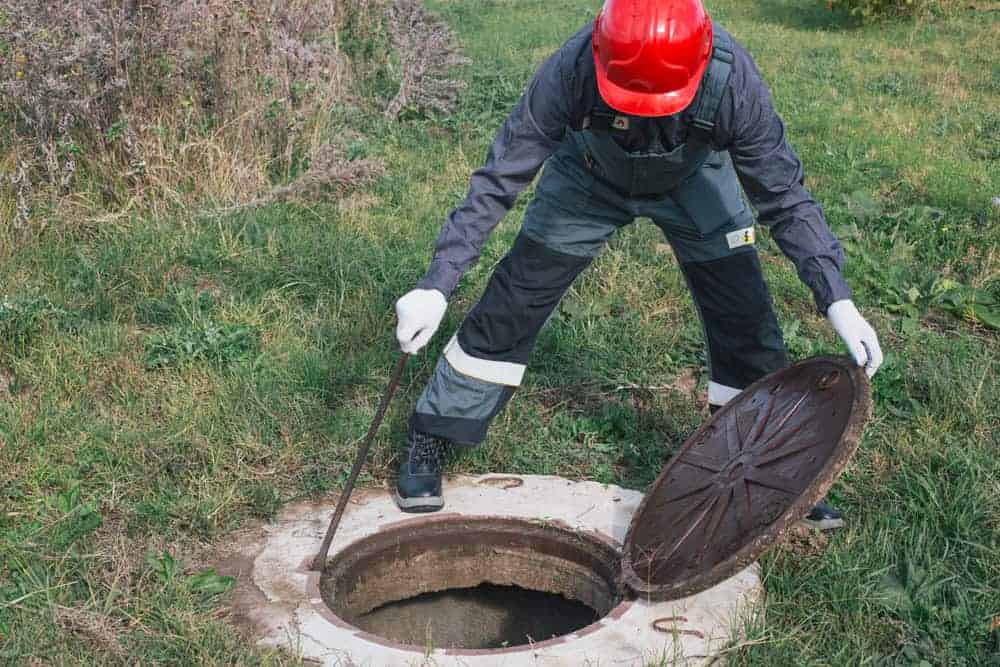
Sewage Odor in Basement From a Dried-Out P-Trap: The Easiest Fix First
If you have a floor drain, laundry tub, basement sink, or bathroom that doesn’t get used regularly, the water sitting in its P-trap can evaporate completely in as little as two to four weeks. Once that water barrier is gone, there’s nothing stopping sewer gas from drifting straight up through the drain and into your basement. This is one of the most common causes of sewage odor in basement spaces — and it’s also the easiest to rule out.
The fix is genuinely simple: pour a gallon of water down every unused drain in the basement. If you want to slow future evaporation, add a small amount of cooking oil after the water — it floats on top and reduces the evaporation rate. Give it 24 hours and see if the smell clears.
This is especially relevant on Long Island’s East End, where homeowners in East Hampton, Amagansett, and Southampton often leave properties vacant for weeks at a time. Coming back to a basement that smells like sewage after a stretch away is almost always a dried P-trap — not a cesspool emergency. But if you pour water down every drain and the smell persists, you’re dealing with something else.
One thing worth knowing: a P-trap fix only works if the trap is dry. If the drain is actively blocked, slow, or gurgling, that’s a different problem pointing at a different cause — and we’ll get to that.
Sewage Gas Smell in Basement From a Blocked or Frozen Vent Stack
Your plumbing vent stack is the pipe that runs from your drain system up through the roof. Its job is to equalize air pressure inside the pipes and give sewer gas a way out. When it gets blocked — by leaves, a bird’s nest, or in Long Island winters, a cap of ice — sewer gas has nowhere to go except back down through your drains.
A blocked vent stack tends to produce a sewage gas smell in basement areas that comes and goes. You might notice it more on cold mornings or after a stretch of still weather, and then it seems to clear up. That intermittent pattern is a strong clue. The smell isn’t going away on its own — it’s just fluctuating with wind pressure and temperature changes.
In the winter months, ice buildup on vent stacks is a real and underappreciated problem for Long Island homeowners. Temperatures don’t have to be extreme — enough cold nights in a row can gradually seal off the vent opening. When that happens, the pressure imbalance forces sewer gas back into the home through every connected drain simultaneously.
If you suspect a blocked vent, this isn’t a DIY job for most homeowners. Getting on the roof safely, identifying the vent opening, and clearing the obstruction without damaging the pipe or flashing takes the right equipment and experience. If the smell is coming from multiple drains at once — basement floor drain, laundry tub, even a first-floor toilet — a blocked vent is high on the list of suspects.
Basement Smells Like Sewage After Rain — or When the Toilet Gurgles
Here’s where Long Island homes diverge sharply from the rest of the country. If your basement smells like sewage after a heavy rain, and especially if you’re also hearing your toilet gurgle when you flush, your shower drain gurgle when you run the washing machine, or your pipes making strange sounds throughout the house — that’s not a plumbing problem. That’s your cesspool telling you something.
Long Island’s water table is high, and its soil is sandy. During wet seasons, the water table rises and the ground becomes saturated. When that happens, your cesspool’s drain field has less capacity to absorb effluent. Pressure builds. And that pressure has to go somewhere — often back up through your drain lines as sewer gas, slow drains, and gurgling sounds.
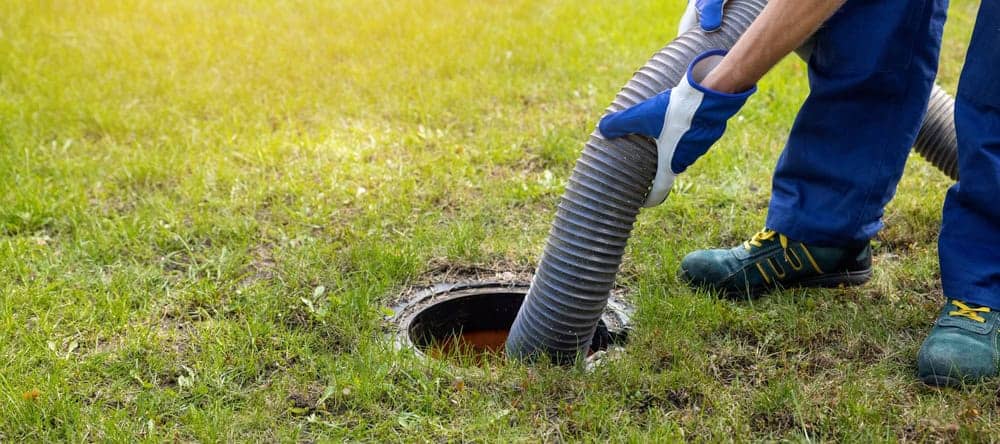
Toilet Gurgling After Flush: What It's Really Telling You About Your Cesspool
A toilet that gurgles when flushed — or bubbles when you’re showering, or makes noise when the washing machine drains — is showing you backpressure. Something downstream is resisting the normal flow of wastewater out of your home. Air that should be moving forward through the system is getting pushed backward instead, and it escapes through the nearest open fixture, which is usually the toilet.
Toilet bubbling when the tub drains, a kitchen sink that gurgles when the washing machine runs — these are all the same signal. The system is under pressure. And when that pressure is paired with a sewage smell in the basement, you’re almost certainly looking at one of three things: a main line that’s partially blocked, a cesspool that’s full or failing, or a drain field that’s saturated and can’t keep up.
On Long Island, where homes in places like Huntington, Oyster Bay, and South Huntington have cesspool systems that may be 40, 50, or even 60 years old, a full cesspool is not a rare event — it’s an expected one. The EPA recommends pumping every three to five years. When that schedule slips, sludge builds up inside the tank. Once sludge takes up more than about a third of the tank’s capacity, it starts interfering with the system’s ability to process wastewater, and backpressure into the home is one of the results.
One misconception worth clearing up: if you just had your cesspool pumped and the smell or gurgling is still there, that doesn’t mean the pump-out failed or wasn’t needed. A recently pumped cesspool can still produce odors if the underlying issue is a cracked tank wall, a blocked inlet or outlet baffle, a saturated drain field, or a plumbing problem that was never connected to the cesspool in the first place. Pumping removes the sludge — it doesn’t repair structural damage or fix a failed leach field.
Gurgling Pipes and Shower Backing Up: When the Problem Is the Drain Field, Not the Tank
A cesspool tank and its drain field are two different parts of the same system. The tank holds solids and allows liquid effluent to flow out into the surrounding soil. The drain field — sometimes called the leach field — is where that liquid disperses and gets absorbed. When the drain field fails, effluent has nowhere to go, and the entire system backs up.
Drain field failure on Long Island is often triggered by exactly the conditions described above: heavy rain, a high water table, saturated soil. But it can also happen gradually over time as the soil around the drain field becomes clogged with biomat — a layer of organic material that slowly reduces the soil’s ability to absorb liquid. Once that happens, no amount of pumping will fix the problem. The drain field itself needs to be addressed.
The symptoms of a failing drain field look a lot like a full cesspool: gurgling drains throughout the house, slow flushes, a sewage smell in the basement, and sometimes wet or soggy ground above the drain field area in the yard. If you’re seeing all of these together — especially after a stretch of wet weather — it’s worth having the system inspected rather than just pumped.
This is also where Long Island’s regulatory environment becomes relevant. Since July 1, 2019, Suffolk County has banned the installation of conventional cesspools. Any system that needs to be replaced must use an Innovative and Alternative Onsite Wastewater Treatment System, known as an I/A OWTS. If an inspection reveals that your system is failing — not just full, but structurally compromised or producing a drain field that can’t be rehabilitated — you may be looking at a mandatory upgrade. The good news is that Suffolk County’s Septic Improvement Program offers reimbursement of up to 75% of the project cost, up to $25,000, for qualifying homeowners who make the switch. That’s a significant offset, and it’s worth understanding before you assume the worst about what a failing system will cost you.
What to Do When Your Basement Smells Like Sewage on Long Island
Start with the simple stuff. Pour water down every unused basement drain and wait 24 hours. If the smell clears, you had a dry P-trap and you’re done. If it doesn’t — or if you’re also hearing gurgling pipes, a toilet making gurgling noise, or noticing slow drains throughout the house — the problem runs deeper than a dried-out trap.
The combination of a sewage smell and gurgling symptoms almost always points to pressure somewhere in the system. On Long Island, that pressure usually traces back to the cesspool. It might be full, it might have a structural issue, or the drain field may be struggling — especially after wet weather or years without service.
If you’re not sure what you’re dealing with, the right move is a proper inspection — not a guess and a pump-out. We’ve been diagnosing exactly these situations across Nassau and Suffolk Counties since 1980, and we can tell you what’s actually causing the problem before any work begins. Give us a call at 631-250-6829 or request a free quote online.
—
FAQ 1: Q: Why does my basement smell like sewer after it rains? A: Heavy rain raises Long Island’s water table, which reduces your drain field’s ability to absorb effluent. When the field gets saturated, pressure builds in the system and sewer gas gets pushed back up through your basement drains. This is one of the most common calls we get after a major storm, particularly in low-lying areas near the South Shore and in communities close to bays and estuaries. If the smell clears within a day or two after the ground dries out, your system is likely marginal — functional but struggling. If it persists or keeps happening, it’s time for an inspection.
FAQ 2: Q: My toilet is bubbling when I flush — is that related to the sewage smell? A: Almost certainly yes. Toilet bubbling when flushed, toilet gurgling when the washer drains, and a sewage smell in the basement are usually symptoms of the same underlying problem — backpressure in the drain system. Air is being pushed backward through your pipes instead of venting properly. The cause could be a blocked vent stack, a main line obstruction, or a cesspool that’s full or failing. When you have both the smell and the gurgling, don’t wait to see if it resolves on its own.
FAQ 3: Q: Can a full cesspool cause a sewage smell inside the house? A: Yes. When sludge builds up past roughly a third of the tank’s capacity, the system can’t process wastewater efficiently. Backpressure develops, and sewer gas gets pushed back through the drain lines into the home. Basement floor drains and laundry tubs are usually the first places you notice it. Regular pumping — the EPA recommends every three to five years — prevents this from happening.
FAQ 4: Q: My basement stinks like sewer but only sometimes. Does that mean it’s not serious? A: Not necessarily. An intermittent sewer smell often points to a partially blocked vent stack — the smell clears when wind pressure briefly opens the blockage, then returns when it doesn’t. It can also indicate a drain field that’s intermittently saturated. The fact that it comes and goes doesn’t mean the problem resolved itself. It usually means the underlying cause is still there and getting worse.
FAQ 5: Q: My sink gurgles when the washing machine drains — should I be worried? A: A sink that gurgles when the washing machine drains is a sign that your drain lines are sharing air in a way they shouldn’t be. The washing machine is pushing a large volume of water through the system quickly, and if there’s any restriction downstream — or if the vent stack isn’t providing adequate airflow — nearby fixtures will gurgle as air gets displaced. On its own it might just mean a partially blocked vent. If it’s happening alongside a sewage smell in the basement, treat both symptoms as part of the same problem and get the system looked at.
FAQ 6: Q: My toilet bubbles when flushed but it’s not clogged — what’s wrong? A: A toilet that bubbles when flushed but isn’t clogged is almost always a venting or backpressure issue. The toilet itself is fine — the problem is downstream. Either the vent stack is blocked and can’t equalize pressure properly, or there’s a partial obstruction in the main drain line, or the cesspool is full enough to be creating resistance. If it’s a one-time thing, it might be nothing. If it’s happening consistently — especially with other symptoms like slow drains or a sewer smell — it needs to be diagnosed.