Summary:
Do I Actually Need a Full Replacement or Can This Be Repaired?
This is the first question for a reason. Some contractors default to recommending full replacement because it’s more profitable. Others genuinely assess whether a repair could extend your system’s life by several years.
A full replacement makes sense when your tank has structural damage, when your drain field has failed completely, or when you’re doing major home renovations that trigger current code requirements. But if your tank is sound and the issue is a clogged line, a broken baffle, or a drain field that just needs rest, you might be looking at a fraction of the cost.
Ask your contractor to show you what’s actually wrong. Request a camera inspection if there’s any question about the tank’s condition or the drain lines. A trustworthy contractor will tell you when repair is an option—even if it means less revenue for them.
What Type of Septic System Does Long Island Require in 2026?
This is where Long Island gets complicated. Suffolk County banned new cesspool installations in 2019. Then in 2021, they started requiring nitrogen-reducing systems for most new installations and major reconstruction projects.
If you’re doing new construction, adding bedrooms that push you over five total, or if your renovation costs exceed 50% of your home’s market value, you’ll need an Innovative/Alternative Onsite Wastewater Treatment System. These I/A OWTS systems reduce nitrogen pollution by up to 70% compared to conventional septics, which matters because nitrogen from failing septics has been degrading Long Island’s water quality for decades.
Nassau County has similar requirements. Both counties are trying to protect the sole-source aquifer that provides drinking water to millions of residents. That means if you’re replacing your system in 2026, you need to know upfront whether you’re looking at a conventional gravity system or a nitrogen-reducing system—because the cost difference can be $10,000 or more.
Not every replacement triggers the nitrogen-reducing requirement. If you’re simply replacing a failing conventional system without expanding your home or changing the footprint, you might still be able to install a conventional system. But you need to verify this with your local health department before you get quotes, because some contractors assume you need the upgraded system when you don’t—or vice versa.
The system type also depends on your property. If you have high groundwater, shallow soil depth, or poor percolation, you might need a mound system, an aerobic treatment unit, or a pressurized distribution system regardless of what the regulations say. Your soil doesn’t care about code—it either drains or it doesn’t.
How Much Does Septic Tank Replacement Actually Cost in 2026?
The range is wide, and that’s frustrating when you’re trying to budget. A basic conventional septic system replacement on Long Island typically runs $5,000 to $12,000. That includes the tank, drain field, excavation, and installation.
Nitrogen-reducing I/A OWTS systems cost more—usually $15,000 to $25,000. The higher price reflects the advanced treatment technology, additional components like pumps and control panels, and the specialized installation requirements. These systems need ongoing maintenance contracts too, which conventional systems don’t.
But here’s what changes the number: your property. If you have easy access, good soil, and a straightforward installation, you’ll be on the lower end. If your septic location is under a deck, if you need to bring in massive amounts of fill for a mound system, if bedrock is two feet down, or if you need to remove mature trees to access the site, costs climb fast.
Permits add another $1,000 to $2,000 depending on your municipality. Soil testing and percolation tests can run $250 to $2,000. If you need to abandon an old cesspool properly, that’s additional. If your property requires a pump system because of elevation issues, add the cost of the pump chamber and electrical work.
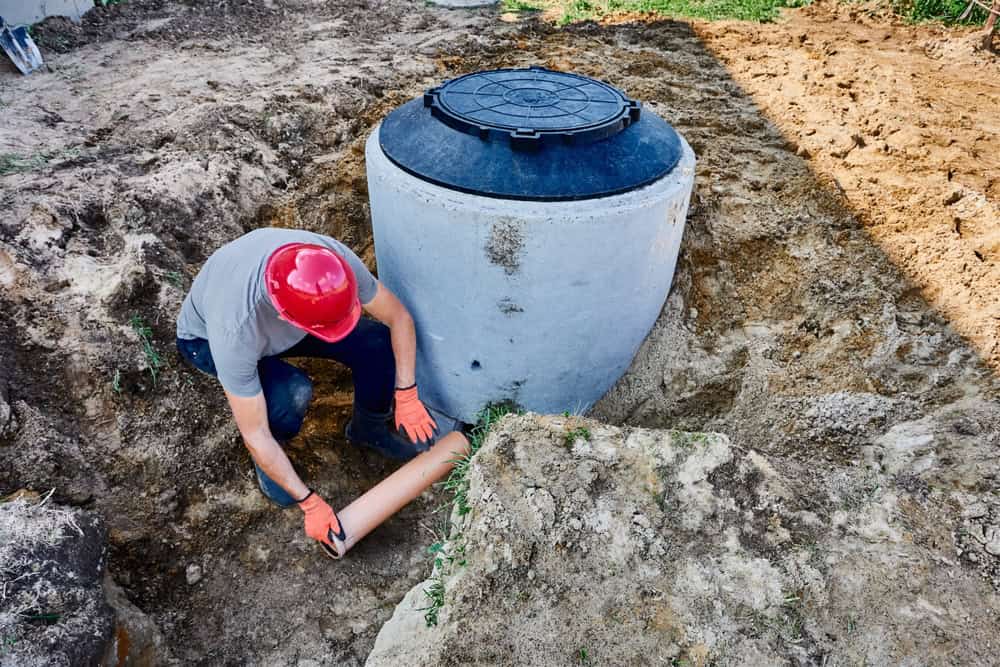
Tank material matters too. Concrete tanks are the standard and typically the most affordable. Fiberglass tanks cost more but are lighter and easier to install in areas with limited access. Plastic tanks fall somewhere in between. For a typical three-to-four-bedroom home, you’re looking at a 1,000 to 1,500-gallon tank capacity.
Get at least three written estimates. Make sure they’re comparing apples to apples—same system type, same tank size, same scope of work. If one quote is dramatically lower, find out why. Are they skipping the permit? Using substandard materials? Planning to cut corners on the drain field size? The cheapest quote often becomes the most expensive when you factor in callbacks, failures, and code violations.
What Permits and Approvals Do I Need?
You can’t just dig a hole and drop in a new septic tank. Suffolk and Nassau counties both require permits, and the process has specific steps that must happen in order.
First comes the site evaluation and soil testing. A licensed professional examines your property’s soil composition, measures the depth to groundwater, checks percolation rates, and determines what system types are feasible. This information goes into your permit application. Then you submit plans to the county health department showing the proposed system design, location, and specifications. They review it against current sanitary code requirements. Once approved, you get a permit to construct. After installation, an inspector comes out to verify everything was built according to the approved plans. Only then do you get final approval to use the system.
Can I Get Grant Money to Help Pay for This?
Yes, and this is critical because the grants can cover most or all of your nitrogen-reducing system costs. Suffolk County offers up to $20,000 through their Septic Improvement Program—a combination of grants and low-interest loans. Nassau County provides up to $20,000 for nitrogen-reducing systems using federal and state funding.
But there are eligibility requirements. Your property must be owner-occupied, used as your primary residence, and served by a septic system rather than connected to sewers. You can’t be a current Suffolk County employee or elected official. Your property can’t have outstanding tax liens. And you need to be in an eligible watershed area where septic upgrades will improve water quality.
The grant programs also require you to use approved contractors from the county’s vendor list. You can’t just hire anyone and expect reimbursement. The contractor gets paid directly by the county on your behalf, which simplifies the process but limits your choices.
Income verification is part of the application. Some additional grant money is available for low-to-moderate income households. Application processing takes time, so if your system is actively failing and you need immediate replacement, you might not be able to wait for grant approval.
Here’s the thing most homeowners don’t realize: even if you don’t qualify for the full grant, you might qualify for low-interest financing through programs like the Community Development Corporation of Long Island’s loan program. And some townships—like Southampton, East Hampton, and Shelter Island—have additional Community Preservation Funds that can stack with county programs.
Ask your contractor if they’re an approved vendor for the grant programs and if they can help with the application process. Some companies have staff dedicated to navigating the grant paperwork, which can make the difference between getting funding and giving up because the forms are overwhelming.
How Long Will My New Septic System Last?
A properly installed and maintained conventional septic system typically lasts 25 to 40 years. The tank itself can last longer—concrete tanks often function for 40+ years if they’re not damaged by ground movement, root intrusion, or poor installation. The drain field is usually the first component to fail, not the tank.
Nitrogen-reducing I/A OWTS systems are newer technology, so we don’t have decades of lifespan data yet. But the mechanical components—pumps, aerators, control panels—will need replacement or repair more frequently than a passive conventional system. That’s why these systems require regular maintenance contracts, typically with inspections every six months to a year.
Your system’s lifespan depends heavily on how you use it and maintain it. Overloading the system with excessive water use shortens its life. Flushing non-biodegradable materials clogs the system. Driving vehicles over the drain field compacts the soil and crushes pipes. Planting trees near the system invites root intrusion. Skipping regular pumping allows solids to migrate into the drain field and clog the soil pores.
If you pump your tank every three to five years, avoid putting grease and chemicals down the drains, fix leaky fixtures promptly, and keep heavy equipment off the drain field, you’ll get decades of service. If you ignore it until there’s a backup, you might be replacing components in 15 years.
Ask your contractor what maintenance schedule they recommend for the specific system they’re installing. Get that in writing. Some contractors offer maintenance contracts where they’ll handle inspections and pumping on a schedule, which takes the burden off you to remember.
Also ask about warranties. What’s covered and for how long? A 10-year warranty on a new drain field is reasonable if you maintain the system properly. Be wary of contractors who won’t stand behind their work or who have vague warranty terms that exclude anything that could actually go wrong.
Making the Right Decision for Your Long Island Property
Septic tank replacement is one of those projects where asking the right questions upfront saves you from expensive mistakes later. You need to know if you truly need replacement or if repair is viable. You need to understand which system type your property and the regulations require. You need realistic cost expectations and knowledge of available grant funding. And you need a contractor who’ll give you straight answers rather than a sales pitch.
The regulations on Long Island have changed specifically because our water quality depends on better septic systems. That makes this more than just a property maintenance issue—it’s about protecting the aquifer that provides drinking water to your family and your neighbors. A properly installed nitrogen-reducing system costs more upfront, but it’s an investment in Long Island’s future while also protecting your property value.
When you’re ready to move forward, work with a contractor who knows Long Island’s soil conditions, understands the current regulatory environment, and can guide you through permits and grant applications. We’ve been handling septic installations on Long Island for over 60 years, working with homeowners through every change in technology and regulation. We know what questions you should be asking—and what the honest answers are.